
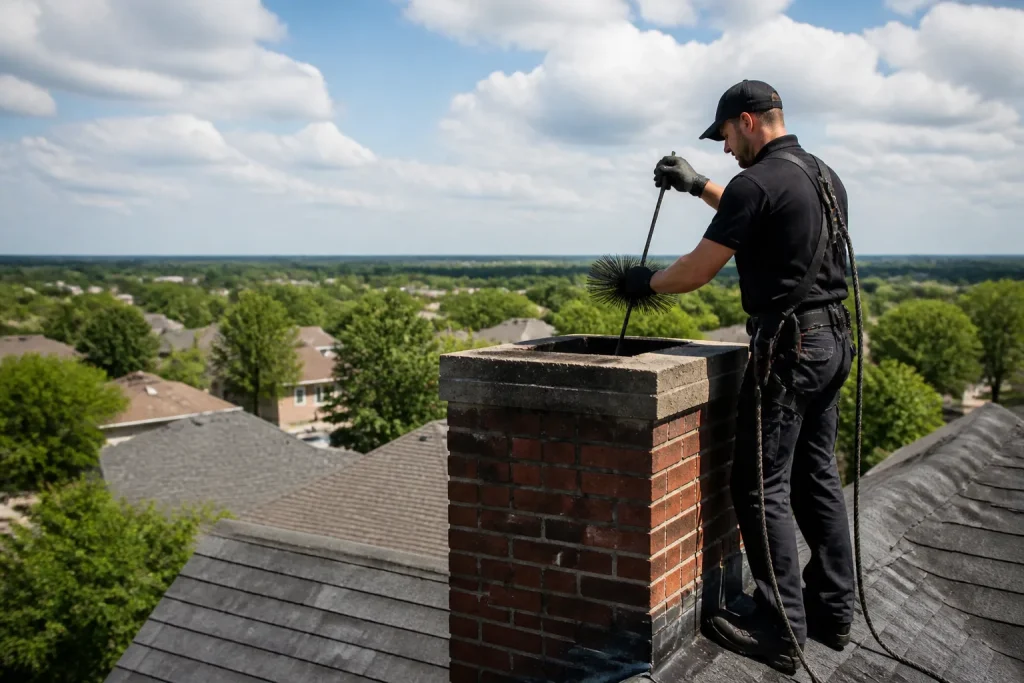
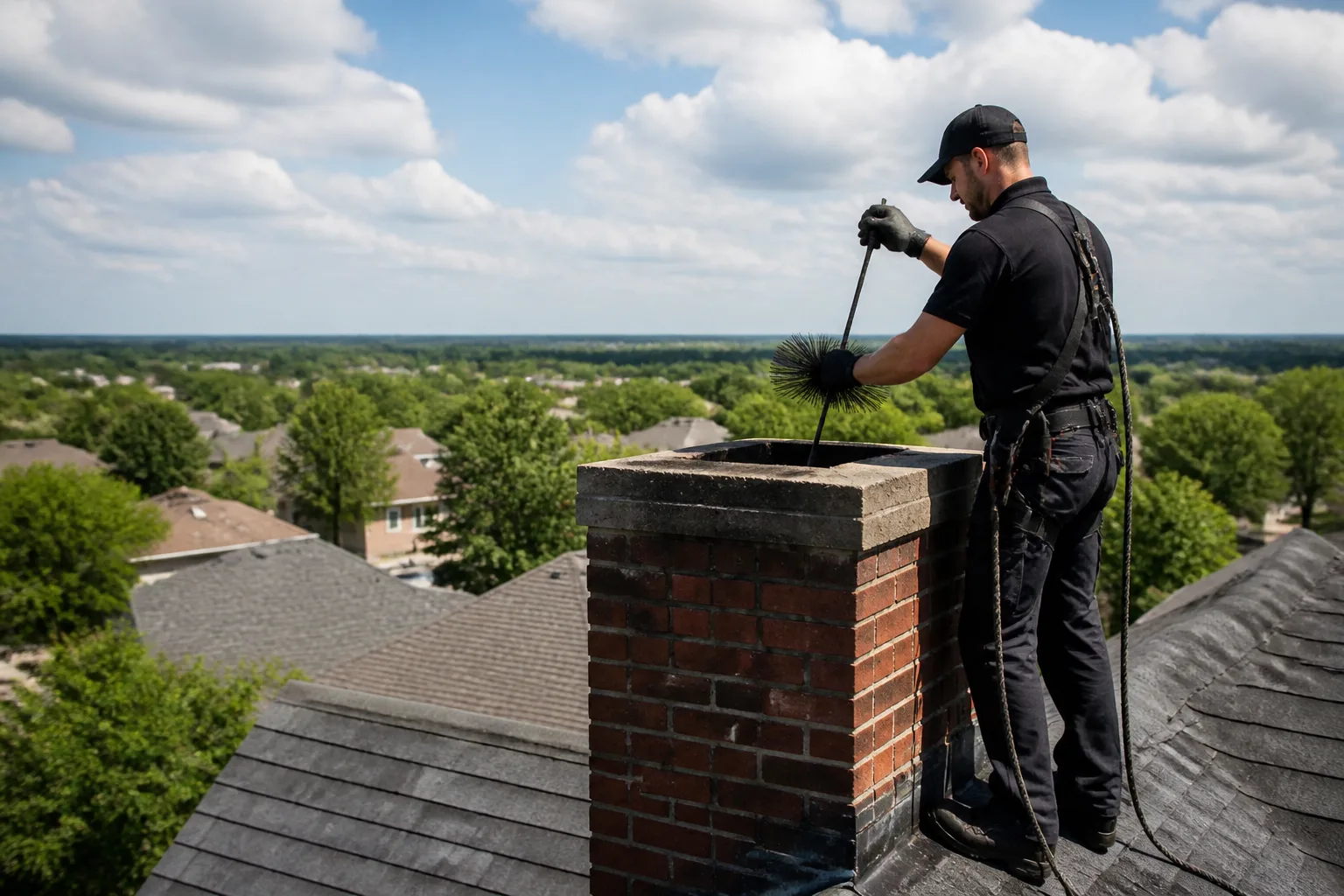
How to Choose the Right Chimney Cleaning Company in Norman
Choosing the right chimney cleaning company in Norman isn’t primarily about reviews or price – it’s about verifying that the company operates to a defined technical standard, because chimney work without that standard produces results that look fine until they don’t. Here’s the question that separates a real chimney company from a sweep with a vacuum: can they tell you which liner system they’d spec for your appliance, and why? If that question lands with a shrug, that’s your answer. If you’d rather skip the vetting and get it handled correctly, call (888) 561-3468.
CSIA certification tells you someone passed an exam. It doesn’t tell you whether they spec a liner to match your appliance’s BTU output or whether they just sell the liner they have in the truck. That gap is where most homeowners in Norman get a chimney that passes the eye test and fails the safety test. What follows is a set of specific, verifiable criteria – not “ask for references.”
Key Takeaways
- Certification is a floor, not a ceiling – ask what it actually covers.
- Ask which liner system the company uses and why. A specific brand name beats “quality parts” every time.
- Confirm what’s included before booking: camera inspection, inspection level, and what happens if the sweep finds a problem.
- Be able to recognize the low-price inspection model so you can ask the right follow-up questions.
- A written, itemized estimate is the only way to compare two quotes honestly.
What Does CSIA Certification Actually Cover – and What Doesn’t It Tell You?
CSIA certification covers the basics of sweeping, the codes and standards a chimney technician should know, and a general understanding of how a chimney system works. It confirms a person passed an examination on that material. It does not confirm that the company specifies products to match your appliance, that they hold capability for advanced repair methods, or that their diagnostic process is thorough. It’s necessary. It’s not sufficient.
What it doesn’t tell you:
- Whether they spec materials to your setup. A liner sized for a wood stove is not the same liner sized for a gas insert. Certification doesn’t guarantee the company thinks in those terms.
- Whether they have specific repair capability. Whether they can resurface a flue with HeatShield or only replace it entirely isn’t covered by any exam.
- Whether their inspection is documented properly. Standards define levels of inspection, but not every company delivers a report you could hand to an insurer or a buyer.
- Whether they’ll tell you the truth when work can wait. No exam tests that.
The additional questions to ask: What liner system do you spec, and why? Can you resurface a flue rather than replace it? What documentation do you provide after an inspection? What’s your process when the sweep reveals a problem? A company that answers these specifically and without hesitation has technical depth beyond the credential. One that deflects to “we’re certified” is hiding behind it.
Why the Material Specification Question Matters More Than Anything Else
The single most revealing question you can ask a chimney company in Norman is this: which liner system do you use, and why? A company that works with professional-tier materials names them. A company that uses whatever is available is telling you something about how their work gets done – and how long it will last.
In our practice, we work with DuraFlex flexible liner systems, Olympia Chimney components, and HeatShield ceramic resurfacing because each fills a different role in the system. DuraFlex handles older or irregular flue configurations that rigid systems can’t navigate safely. HeatShield lets us restore a deteriorating flue liner that’s structurally sound without jumping straight to full replacement. Olympia Chimney components round out the system with the same trade-level sourcing you’d expect in new construction and major restorations. The material names matter because they define what the repair can actually accomplish.
When you ask a company which brand they use, you’re not asking for a sales pitch. You’re asking whether they have a toolbox deep enough to solve your specific problem with the right tool, or whether they’ll solve it with the only tool they have. In our experience, the companies that can’t name their materials tend to specify the same liner for every job – and that’s a recipe for a chimney that looks repaired and isn’t.
Ask for it plainly: “What liner system do you spec, and why did you choose it for my chimney?” Then ask them to explain it back to you in plain English. Trade-grade materials, trade-grade explanation. There’s no reason you shouldn’t understand exactly what’s going into your home.
The Scope Questions to Ask Before You Book
Most surprises on a chimney job come from scope, not workmanship. Before you book any chimney sweep in Norman, get these four questions answered in writing, because the answers are the difference between an honest quote and a foundation for upsells.
- Does the quote include a camera inspection? A sweep without a camera is a cleaning. An inspection without a camera is guesswork. Ask whether the camera is standard, not an extra.
- What NFPA 211 inspection level does this cover? The standard defines levels of inspection from a basic visual check to a full inspection of accessible components. Ask which level the quote specifies, and whether that matches what you actually need – a real estate transaction may need a higher level than a routine seasonal sweep.
- What happens if the sweep reveals a problem? A good answer is specific: we tell you what we found, show you the camera footage, and give you a written estimate for the repair – which you can act on or defer.
- What’s in the written report? Ask whether you get a documented assessment you can keep. That matters for insurance, for a home sale, and for your own maintenance records.
Any company that can’t answer these before booking is asking you to trust them with your chimney without telling you what you’re getting. The answers themselves are a quality filter.
How to Recognize the Low-Price Inspection Model
There’s a business model common in chimney work that looks like a bargain and isn’t: the very low-priced sweep or inspection is the customer-acquisition cost, and the repair quote that follows is the profit center. That doesn’t mean every low price is dishonest. But it does mean you should ask a specific follow-up: what’s the incentive behind this price?
How the model usually works:
- A sweep is priced far below what a proper job costs to do.
- The inspection reveals a list of “critical” problems that must be addressed immediately.
- The repair quote is the real transaction.
- The homeowner has no independent way to verify whether the recommended work is actually needed.
You don’t need to hunt for the lowest price in Norman. You need to know whether the person standing in front of your fireplace has a reason to find problems. When we do an inspection, the camera footage goes to you. If the flue can be restored instead of replaced, we tell you that – even though replacement costs more. If a repair can safely wait, we say so, and put in writing what we found so you can decide on your own timeline.
The question to ask when a low quote comes in: “If the sweep finds nothing, what will I owe you?” Listen closely to the answer. A company that’s fine with a clean bill of health and no upsell is one worth keeping.
What a Written, Itemized Estimate Should Contain
Two chimney quotes can use completely different scope language and look identical on paper. An itemized written estimate is what lets you compare them apples-to-apples. If a company hands over a single number on a business card, you can’t reasonably evaluate it against anything.
A proper estimate should list:
- The service scope in plain terms. “Sweep and inspect” means nothing specific. “Sweep of a wood-burning flue with a Level 2 camera inspection and written report” does.
- The materials and brands specified. If a liner or repair is part of the job, the brand and system should be named – DuraFlex, HeatShield, Olympia Chimney, and so on. “Quality materials” is not a line item.
- What’s included versus extra. Is the camera inspection included? Is the report included? Are permits the homeowner’s responsibility (they usually are, if any apply)?
- A clear statement that the estimate is the price. A written estimate sets the final price. You shouldn’t be told after the work is done that it was “more complicated than expected.”
- A note on what to do if the sweep reveals a problem. The estimate should state that you’ll receive a separate written quote for any recommended repair, and that you can act on it or not.
When you compare two quotes, compare the scope, not just the total. A higher quote that includes a camera inspection, a written report, and the actual material spec is often cheaper than the low quote that leaves the real costs unspoken.
When to Call a Pro Instead of Waiting
Some chimney work is straightforward maintenance. Some of it isn’t. Creosote buildup, a spalled liner, a failed damper, or a gas appliance that hasn’t been inspected are not jobs to put off until the next cold snap. If your fireplace smells of soot on warm days, if smoke backs into the room, if you’ve never had the flue inspected, or if you’re buying or selling an old Norman home and need a credible assessment, schedule a sweep – and ask the scope questions above before you book.
The stakes here are fire safety and carbon monoxide, not just a dirty fireplace. A trained professional handles the sweep, the inspection, and any repair. If a technician tells you the flue can be restored rather than replaced, that’s worth hearing – and worth verifying. Sweep. Repair. Inspect. One company, one standard of work. If you’re in Norman and want a chimney sweep that comes with a documented assessment, we handle that. If the sweep reveals a problem, our chimney repair team handles HeatShield resurfacing and DuraFlex liner work. Related services in Norman: chimney cleaning, inspection, and repair, all through Chimney Sweep Norman.
Our technicians have up to 11 years of experience. We work with DuraFlex, HeatShield, Olympia Chimney, Famco, and Copperfield because that’s the standard those products set – and because a homeowner should be able to look up exactly what’s going into their chimney. We tell you exactly what we’re putting in your chimney and why. If your flue can be restored instead of replaced, we’ll tell you that too. A clean chimney is a fire-safety decision, not a maintenance checkbox.
The Bottom Line
Choosing a chimney company in Norman comes down to verification, not vibes. Confirm certification but don’t stop there. Ask which liner system they spec and why. Ask the four scope questions before booking. Recognize the low-price inspection model so you can ask the follow-up. And insist on a written, itemized estimate you can compare line by line. A company that can answer all of that with specifics – and that puts the recommendation in writing with camera footage you can see for yourself – is the one worth your trust.
If you’re in Norman and need help, Chimney Sweep Norman offers free estimates – call (888) 561-3468. We answer 24/7. Fast dispatch from 7am to 7pm, Sunday through Friday. The estimate is free and the written estimate sets the final price.
Frequently Asked Questions
Yes – certification is the baseline. It confirms the technician passed an exam covering chimney standards and codes. But certification alone doesn’t tell you whether the company specs a liner to your appliance or has repair capability like HeatShield. Ask both questions. Call (888) 561-3468 if you want the answers from us – estimates are free.
Most wood-burning chimneys should be swept when creosote buildup reaches roughly an eighth of an inch on the flue walls, which for many households means annually. A gas appliance should be inspected annually even though it doesn’t produce creosote. The right answer is based on what the inspection shows, not on a fixed calendar. Call (888) 561-3468 for an exact scope – estimates are free.
A sweep removes creosote and soot. An inspection assesses the flue, damper, and connected components and produces a documented report. They’re different services, and you want both in the same visit from a company that can explain what NFPA 211 inspection level you’re receiving. Call (888) 561-3468 to ask about scope – estimates are free.
Ask for the camera footage and a written estimate. If the flue can be restored with HeatShield instead of fully relined with DuraFlex, the repair should say so – even though that costs less. You shouldn’t take a company’s word for it; you should see the evidence. Call (888) 561-3468 to book an inspection with a report you keep. We answer 24/7. Fast dispatch from 7am to 7pm, Sunday through Friday.
Written by the team at Chimney Sweep Norman.
Need Chimney Cleaning Help?
Call Chimney Sweep Norman - licensed & insured, with free written estimates in Norman.
(888) 561-3468