
Last updated November 15, 2026
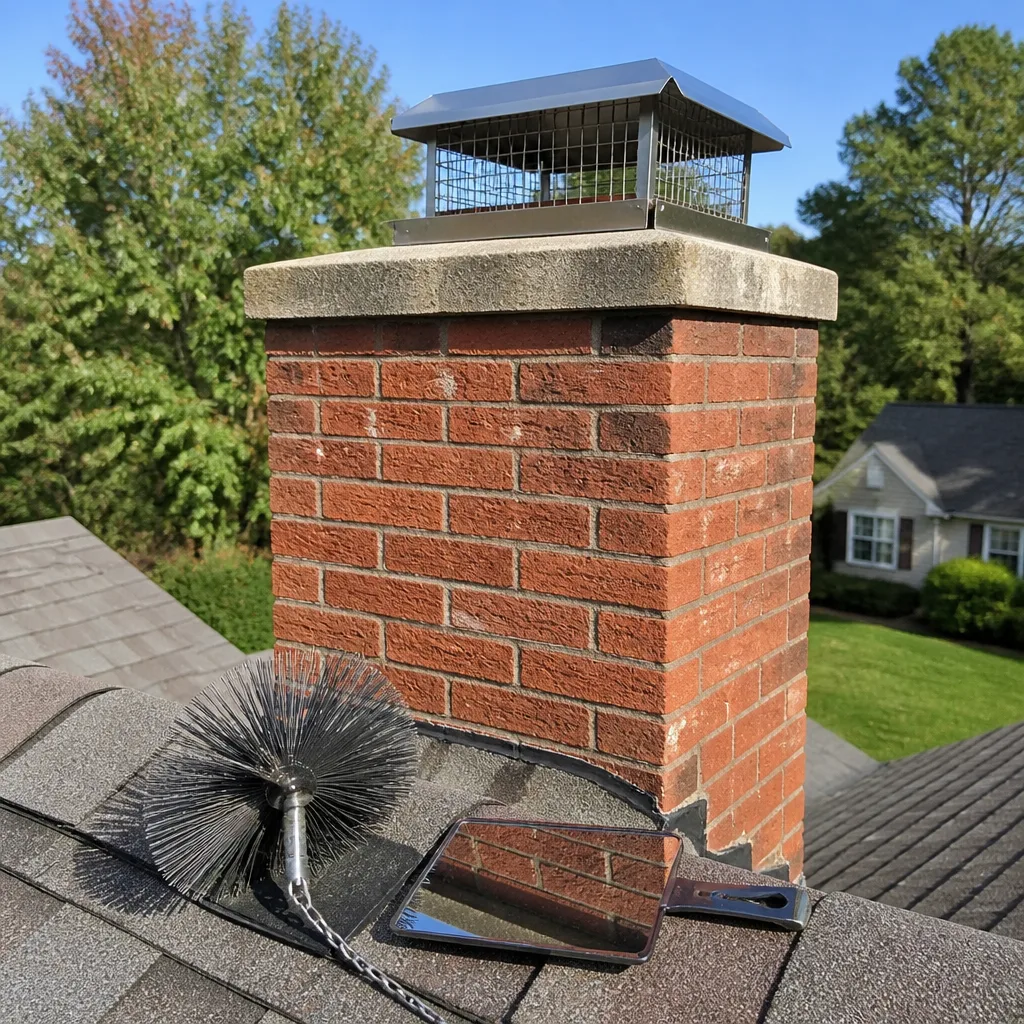 Sweep & inspection
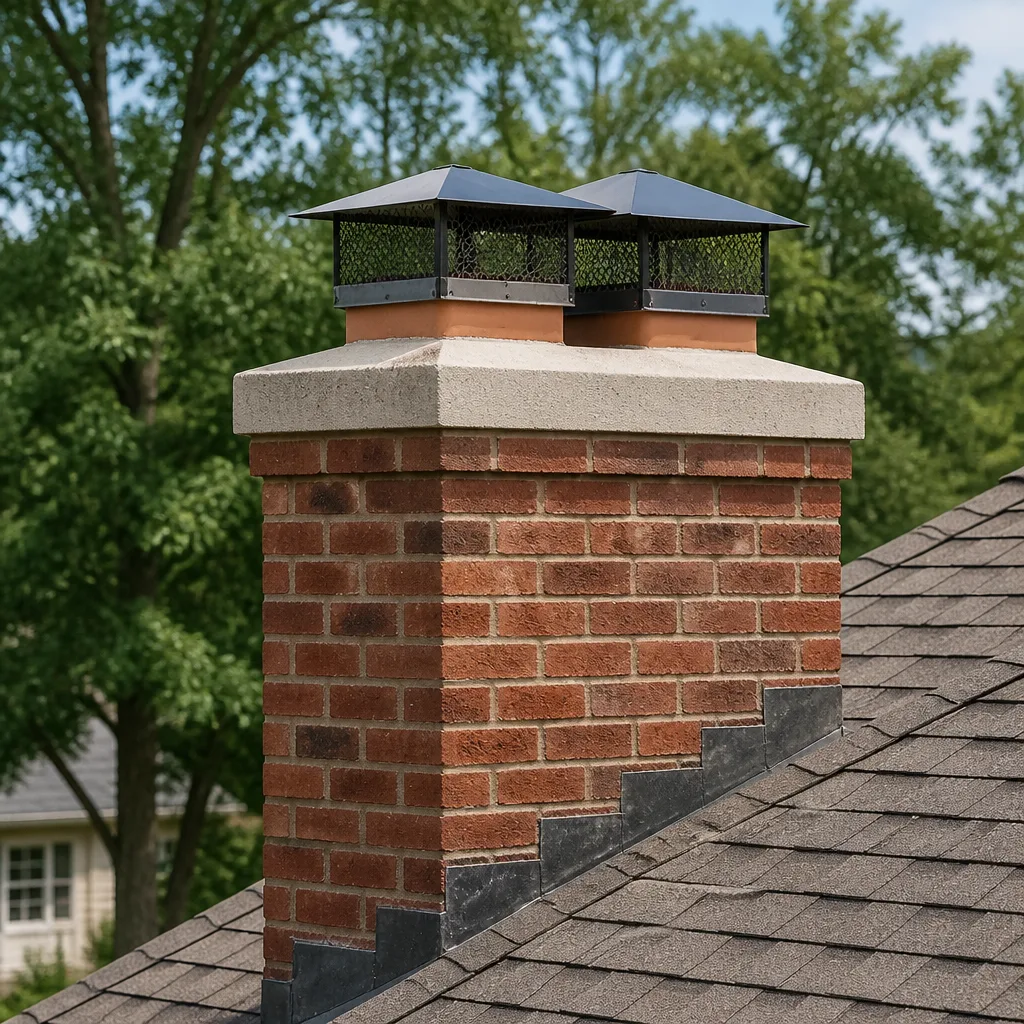 Caps & crowns
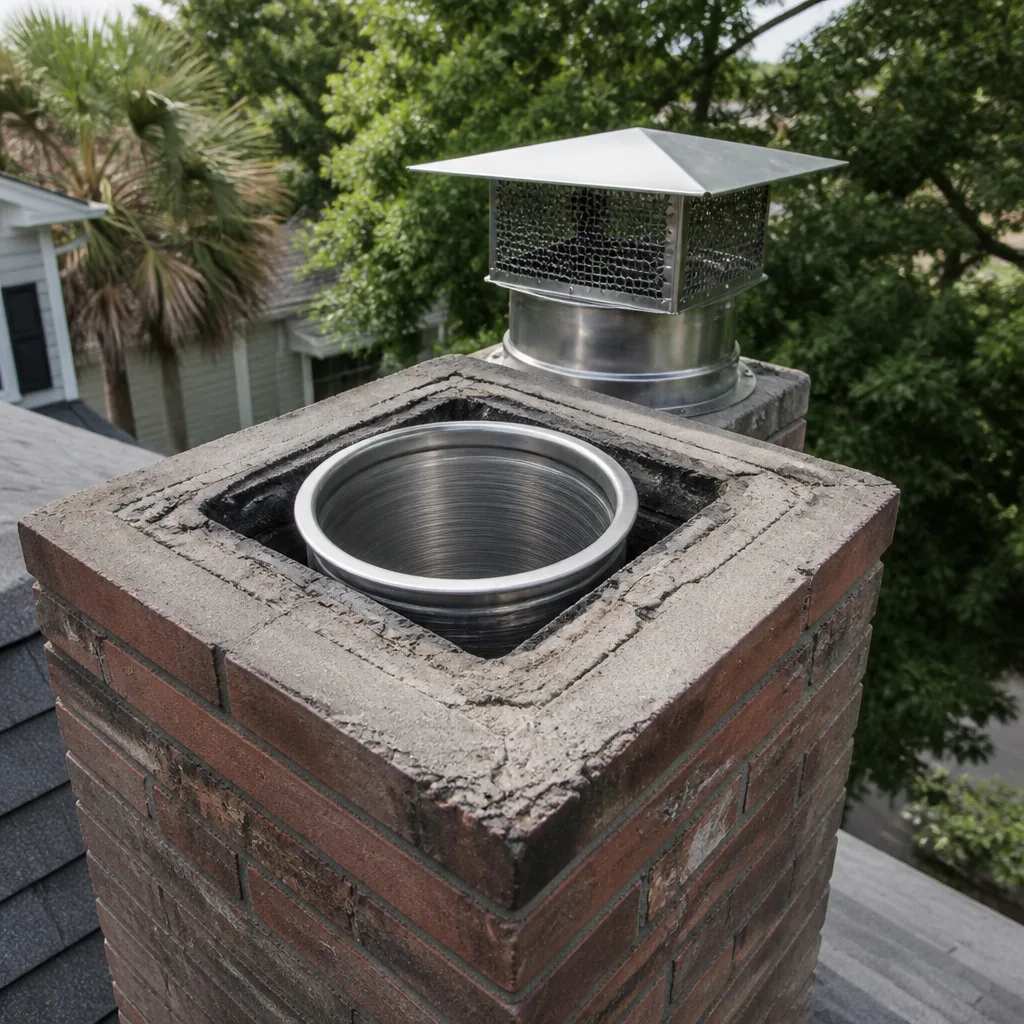 Flue relining
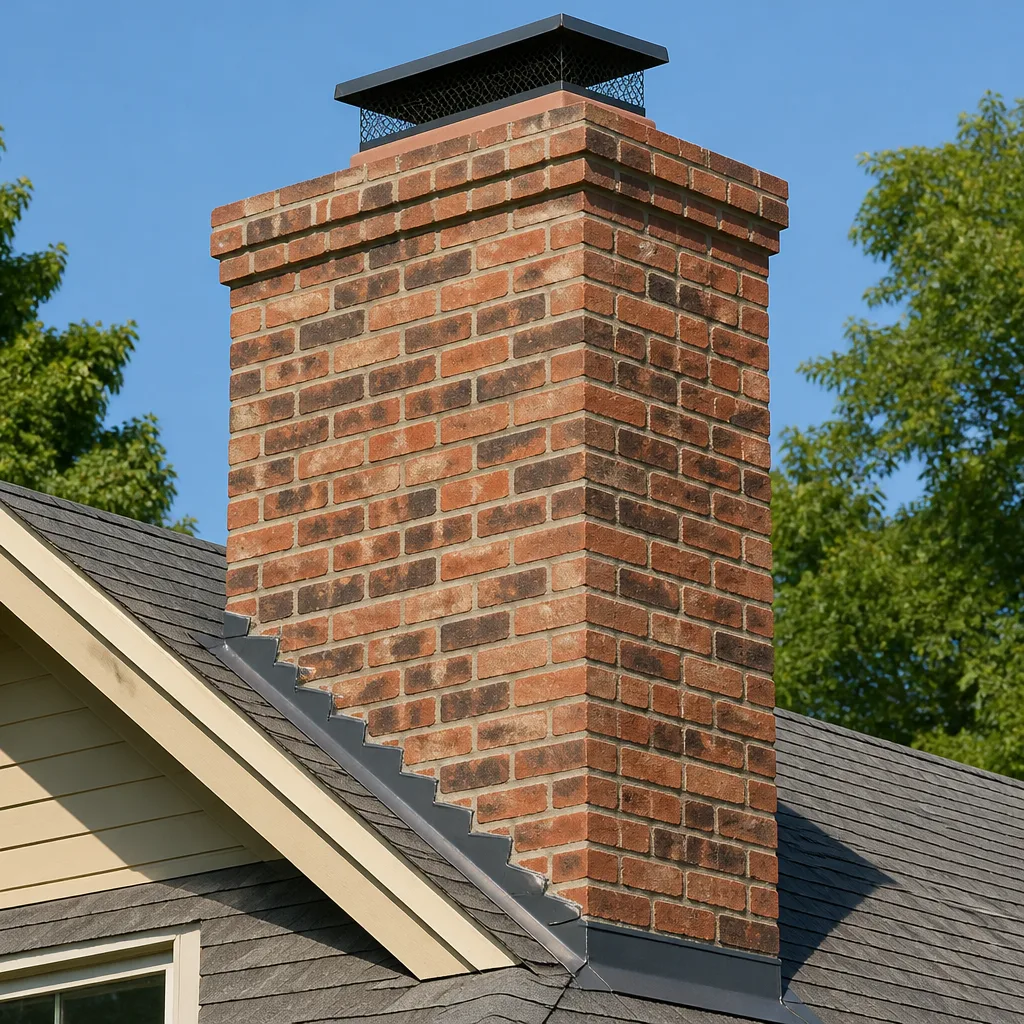 Masonry repair
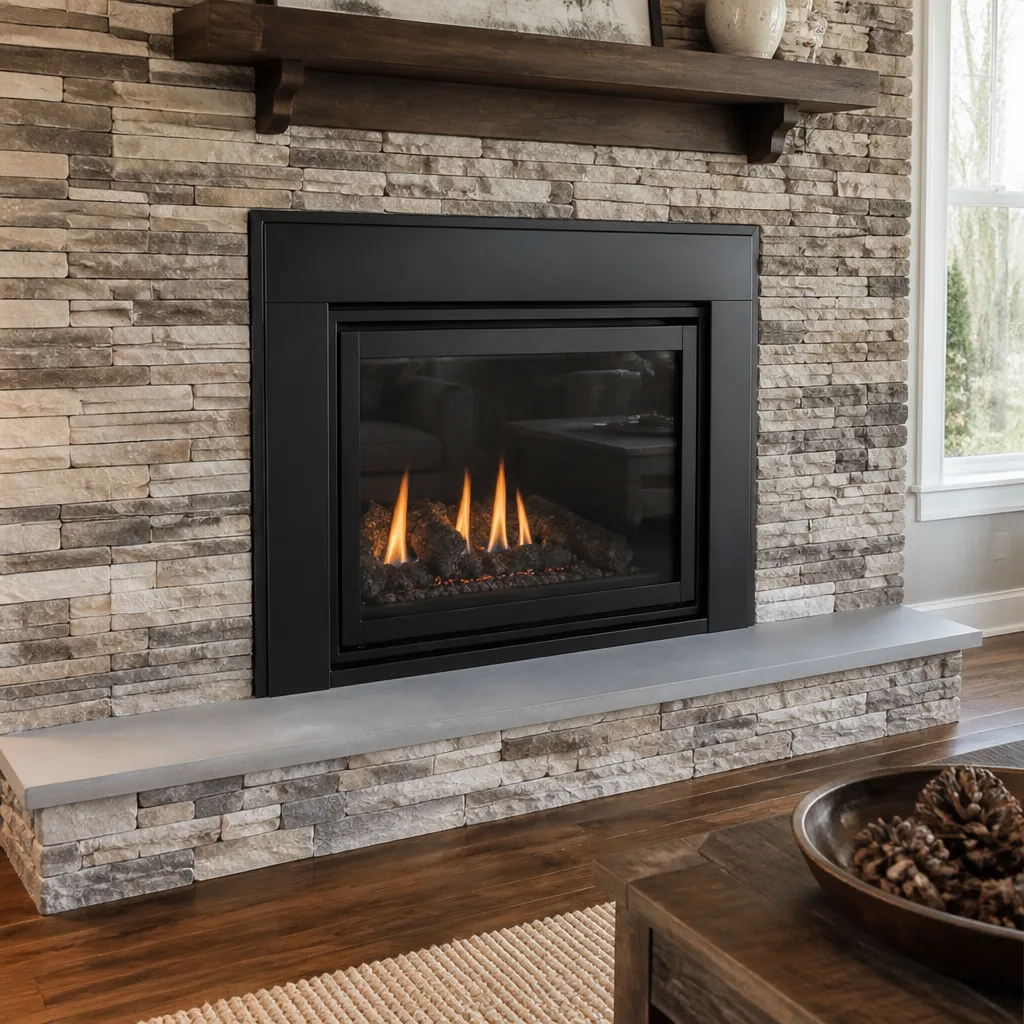 Gas fireplace service
Level 1 sweep and inspection to the NFPA 211 annual standard - flue, crown, cap, and flashing checked and photographed
Chimney sweep logs do not sweep chimneys. They loosen some creosote - which then falls where a brush and vacuum still have to collect it.
DIY vs Professional Chimney Cleaning: The Norman Homeowner’s Decision Guide
Achimney brush kit from the hardware store will clean a chimney. That’s the part most guides skip over, and it’s true more often than the sweep industry likes to admit. On a straight flue with light, flaky creosote that a professional has already looked at with a camera, brushing it yourself is legitimate maintenance, not a shortcut. The trouble starts one step further in. Brushing removes what a brush can reach and does nothing about glazed creosote, the smoke chamber, or the condition of the liner itself. Most homeowners who clean their own Norman chimney come away believing it’s done when only a fraction of it is. This guide draws that line precisely: when DIY is reasonable, when it’s a false economy, and how to tell the difference before you climb a ladder.
Quick Answer
DIY chimney brushing is appropriate only when three conditions are met: a single straight flue, confirmed stage-one creosote from a prior professional assessment, and an accessible cleanout at the base. Anything past that – stage-two or glazed creosote, a smoke chamber that needs cleaning, an unknown liner, or a prefab zero-clearance unit – calls for a professional chimney sweep with a camera and the right tooling. Professional cleaning also includes a documented inspection of the liner, which a DIY brush job cannot provide.
Styles & brands we work with
- Sweep & inspection
- Caps & crowns
- Flue relining
- Masonry repair
- Gas fireplace service
Table of Contents
- The Three Conditions for Legitimate DIY Cleaning in Norman
- What DIY Brushing Physically Cannot Accomplish
- The Safety Gear Most DIY Chimney Cleaners Skip
- The Camera Inspection Gap: Why a Clean Chimney Isn’t a Safe Chimney
- Prefab and Zero-Clearance Units vs. Masonry: Why They Differ for DIY
- Creosote Stages Explained: Stage One, Two, and Three
- Norman’s Climate and Burn Season: Why Timing Matters
- How a Professional Sweep Works, Step by Step
The Three Conditions for Legitimate DIY Cleaning in Norman
We’re not going to tell every homeowner that DIY is dangerous. That’s not honest, and Norman homeowners are sharp enough to spot the sales pitch. There are real situations where a DIY brush job is a fine maintenance decision. But those situations are narrower than most people assume, and they hinge on three specific conditions being met at once.
A chimney qualifies for safe DIY brushing when all three of these are true:
- Single straight flue. One firebox, one flue, no offsets, no bends. Offsets trap debris and a straight brush rod can’t navigate them without risk of scratching the liner or getting stuck.
- Confirmed stage-one creosote. A professional has already assessed the chimney and confirmed the buildup is the flaky, friable stage-one type. Not stage two, not glazed. This isn’t something you judge by looking up the flue with a flashlight from the firebox.
- Accessible cleanout at the base. A cleanout door on an exterior wall or in a basement that opens fully and lets you sweep the debris down and out. In Norman homes, this often means the cleanout is in the garage, a utility closet, or the exterior wall – not behind drywall or bricked shut.
If all three conditions are met and a previous professional assessment confirmed stage-one buildup, DIY brushing once a season between professional inspections is reasonable. If any one of them is missing, the DIY math stops working. Miss two and you’re not saving money, you’re deferring a real safety check.
Norman has plenty of homes that fit condition one easily – single-story brick ranches built in the 1960s and 1970s often have a clean straight flue. The houses that don’t fit tend to be older two-story homes near the University of Oklahoma campus, where offsets and rear-vented fireplaces are common.
What DIY Brushing Physically Cannot Accomplish
Here’s where we’re direct. A brush and a shop vac handle one specific job – knocking loose stage-one creosote off the flue walls in a straight run. Everything past that point is outside the tool’s capability, and no amount of effort closes the gap.
What a DIY clean does not do:
- Remove stage-two or glazed creosote. Stage-two creosote is hard and crusty and doesn’t yield to bristles. Glazed creosote is tar-like and needs chemical treatment or mechanical removal with a rotary whip tool. A nylon or poly brush just polishes it.
- Clean the smoke chamber. The smoke chamber sits above the damper and above the firebox, and it’s a sloped chamber that collects serious creosote in the corners. Cleaning it properly requires reaching it from above with the right tooling. Most DIY setups can’t access it at all.
- Assess the liner. Brushing a flue tells you nothing about whether the liner is cracked, spalled, or improperly sized. Those are the conditions that actually matter for fire risk.
- Evaluate the damper and firebox. A failed damper or a warped firebox isn’t visible from a normal brush pass.
- Document the job. A DIY clean produces no record. That matters for insurance, real estate transactions, and your own maintenance log.
We’ve walked into Norman homes where the homeowner had been brushing faithfully every fall for years. Clean flue walls, they thought. What the camera found was a hairline crack in the liner near the top and twenty years of smoke chamber buildup they’d never touched. The brush had done its one job. The chimney was still a problem.
The Safety Gear Most DIY Chimney Cleaners Skip
We’ve seen hundreds of DIY chimney cleaning attempts, and here’s the pattern: most homeowners do the brushing part with reasonable care and skip two or three pieces of safety infrastructure that make the whole thing defensible. It’s not laziness – it’s that nobody told them the setup requirements.
A legitimate DIY setup includes:
- Drop cloths sealed to the floor. Not just laid around the firebox. Sealed with tape around the perimeter so soot can’t migrate under. Soot gets into carpet fibers and stays there, and it’s a job to remove.
- The firebox opening sealed. A sheet of plastic taped completely around the firebox perimeter before you start. Without this, sweeping aerosolizes fine ash that settles over the entire room.
- A proper respirator. Not a dust mask, not a bandana, not an N95. A half-face respirator with P100 cartridges rated for fine particulates. Creosote dust is a known respiratory irritant and a suspected carcinogen. A dust mask lets most of it past.
- A vacuum with HEPA filtration. A shop vac without HEPA filtration blows fine soot back into the room’s air. A HEPA-rated unit captures it. Most homeowners use a standard shop vac and end up breathing the fines.
- Eye protection and gloves. Non-negotiable. Soot in the eye is a clinic visit.
Two or three of these get skipped in most DIY jobs. The ones most often skipped are the respirator and the HEPA vacuum, and those are the two that matter most for air quality in the room.
If you’re going to brush your own flue, get the setup right first. Half the infrastructure is worse than admitting you’d rather have a pro do it. And this is a room your family sits in every winter.
The Camera Inspection Gap: Why a Clean Chimney Isn’t a Safe Chimney
A chimney can be spotless on the inside and still be dangerous. That’s the single most important thing to understand in the DIY debate, and it’s the gap a brush kit can’t bridge.
When we sweep a chimney in Norman, the camera goes down or up the flue before and after the brushing. That scan tells us:
- Whether the liner is continuous and free of cracks
- Whether the flue is properly sized for the appliance
- Whether there’s offset debris the brush missed
- Whether previous chimney fires left damage you can’t see otherwise
A DIY clean gives you none of that. It gives you clean flue walls and a completed chore. That’s a real thing, and it has value – but it isn’t the same as knowing your chimney is safe. Those are different questions.
The false confidence is the risk. Homeowners who brush faithfully every year tend to skip the professional inspection because they feel like they’re caught up. Meanwhile the liner condition is completely unevaluated. We’ve seen this exact pattern in Norman homes more than any other DIY failure mode. The cleanest chimneys sometimes hide the worst liners, because the homeowner was diligent about the part they could see.
Our chimney repair work frequently starts with that camera scan. Sometimes it ends with “your liner’s fine, keep doing what you’re doing.” Sometimes it ends with a HeatShield restoration. Either way, the homeowner finally knows.
Prefab and Zero-Clearance Units vs. Masonry: Why They Differ for DIY
Norman has a lot of both. Older homes near the courthouse and in established neighborhoods tend to be masonry fireplaces. Newer construction on the city’s edges tends to be prefab or factory-built zero-clearance units. The DIY question is different for each.
Masonry Chimneys
Masonry is the friendlier DIY target. Straight flues, a cleanout, and robust construction mean a homeowner with the safety gear and stage-one creosote can brush without much risk of damaging the structure. The brush, the rod, and a straight run down the flue – that’s the whole operation. Not easy, but predictable.
Prefab and Zero-Clearance Units
Prefab is where DIY gets riskier, and this is the part most guides don’t discuss. Prefab fireplaces have proprietary components – damper assemblies, firebox panels, and specific flue configurations tied to the manufacturer. They also have specific clearance-to-combustibles requirements that are part of the certified installation. Brushing one with the wrong tool can damage the firebox liner panels, and those panels are integral to the unit’s safety rating.
If you’re in a zero-clearance unit, DIY brushing only makes sense if:
- A professional has already confirmed the unit’s condition
- You have the manufacturer’s documentation on hand
- You know which parts of the firebox and damper are protected
- The flue is a straight run with a cleanout the manufacturers approve for brushing access
In our experience, most Norman homeowners with prefab units are better served by an annual professional sweep. The tooling is different from masonry brushes, and the tolerance for error is lower. If you’re not sure what you have, that’s a professional question before it’s a DIY one.
Creosote Stages Explained: Stage One, Two, and Three
The whole DIY decision depends on knowing which creosote you’re dealing with. Here’s the breakdown:
Stage One: Flaky and Friable
Soot and light ash, brushes off easily. This is the stage where a brush works. Most wood-burning fireplaces in Norman hit stage-one buildup within a season of regular burning. It’s the baseline.
Stage Two: Hard and Crusty
Darker, denser, and bonded to the flue wall. A brush skates over the surface but doesn’t remove it. Stage-two creosote is common in Norman homes where the wood is less than fully seasoned or the fire is regularly burned cool. Removing it takes a rotary tool or chemical treatment – a professional job.
Stage Three: Glazed
Tar-like, hardened, glassy on the surface. This is the stage that ignites. It cannot be removed by brushing at all. It requires a rotary whip with a chain or cutting head, sometimes followed by chemical treatment. When we see glazed creosote in a Norman home, it’s usually the result of burning unseasoned wood over several seasons or running an inefficient fire regularly. Never a DIY situation.
The American Chimney Sweep standard is to remove buildup when it reaches about 1/8 inch in the flue. That’s the threshold most creosote inspections start from. It’s a small amount of buildup, which is why an annual check matters more than the single cleaning.
Norman’s Climate and Burn Season: Why Timing Matters
Norman’s burn season runs roughly from late October through March, though a cold snap in April is not unheard of and homeowners with wood-burning stoves will sometimes burn into May. That’s about five months of regular fire in a typical year, more if the winter is cold.
The timing of the sweep matters because of Oklahoma’s dry, hot summers. By the time late August or September rolls around, last winter’s creosote has had months to cure and harden. Stage-one becomes stage-two more easily than people realize. A sweep in early fall catches creosote at its softest and easiest to remove. A sweep in the middle of burn season means more buildup has accumulated since the last cleaning.
We recommend a professional assessment in the late summer or early fall for Norman homeowners, before the first burn of the season. It’s also when the camera scan confirms the liner is ready for another winter. A DIY brush job in October following a professional scan in August is a reasonable one-two punch. A DIY brush job in October in lieu of a professional scan is not.
The other Norman consideration is the housing stock itself. Homes near Norman‘s older neighborhoods – the ones built in the 1950s and 1960s – often have chimneys that were designed for a fireplace that burned differently than what’s installed today. A wood insert added in the 1990s, a gas log set added later, a fireplace that was originally an open hearth – each of those changes the cleaning requirements. The liner size, the flue configuration, and the creosote profile all shift. A professional assessment catches that history. A DIY brush doesn’t.
How a Professional Sweep Works, Step by Step
If you’re comparing DIY to professional, knowing what a professional cleaning actually includes helps. The process is more than a brush down the flue.
- Setup. Drop cloths sealed around the firebox, HEPA vacuum running to maintain negative pressure in the room. This is what keeps the room clean.
- Pre-scan. A camera goes up or down the flue to document existing conditions and identify buildup, damage, or blockages.
- Brushing. The appropriate brush (poly, wire, or rotary, depending on the flue) sweeps the flue walls. For stage-two or glazed creosote, rotary tooling is used.
- Smoke chamber and damper cleaning. Specialized tools reach the smoke chamber above the damper, which a brush-through from the firebox cannot access properly.
- Cleanout and debris removal. Debris from the cleanout is bagged and removed, not just vacuumed.
- Post-scan. The camera goes back in to verify the clean and check the liner, flue joints, and damper condition.
- Report. A written summary of the job, the liner condition, and any recommendations – documented for insurance or real estate use.
That’s what a professional sweep includes. When we do one in Norman, the report at the end is often the most valuable part of the job. It’s a snapshot of the chimney’s health that you can hold onto and reference year to year.
For structural issues the camera finds, we work with HeatShield ceramic resurfacing to restore a liner that is structurally sound but deteriorating, rather than replacing it outright. For liners that can’t be restored, DuraFlex flexible liner systems retrofit older or irregular flues safely. When we quote a repair, we specify the material – HeatShield, DuraFlex, Gelco caps, Olympia Chimney, Famco, Copperfield – so you know exactly what’s going into your chimney and why.
Common Mistakes to Avoid
- Brushing without a prior professional assessment. If no one has looked at your liner with a camera, brushing tells you nothing about the chimney’s actual condition. Get the scan first, then decide if DIY is appropriate.
- Using a dust mask instead of a proper respirator. A dust mask or N95 doesn’t filter the fine particulates in creosote dust. A half-face respirator with P100 cartridges does. This is skipped more often than any other step.
- Skipping the firebox seal. Without plastic taped completely around the firebox opening before brushing, soot settles over the entire room. It’s a several-hour cleanup that a piece of plastic prevents.
- Brushing a prefab fireplace with masonry tools. Prefab and zero-clearance units have proprietary firebox panels and damper assemblies. A wire brush meant for masonry can damage the liner panels and change the unit’s safety characteristics.
- Assuming clean flue walls mean a safe chimney. The brush can only clean what it reaches. It cannot tell you whether the liner is cracked, whether the smoke chamber is loaded with creosote, or whether a previous fire caused damage.
- Skipping the insurance and real estate inspection. A DIY clean produces no documentation. If you’re selling a Norman home or filing an insurance claim related to a chimney issue, the written inspection is what the transaction relies on.
- Cleaning in the middle of burn season instead of before it starts. Creosote accumulates throughout the season. Cleaning in October catches it at its softest. Cleaning in January means a second clean is often needed by March.
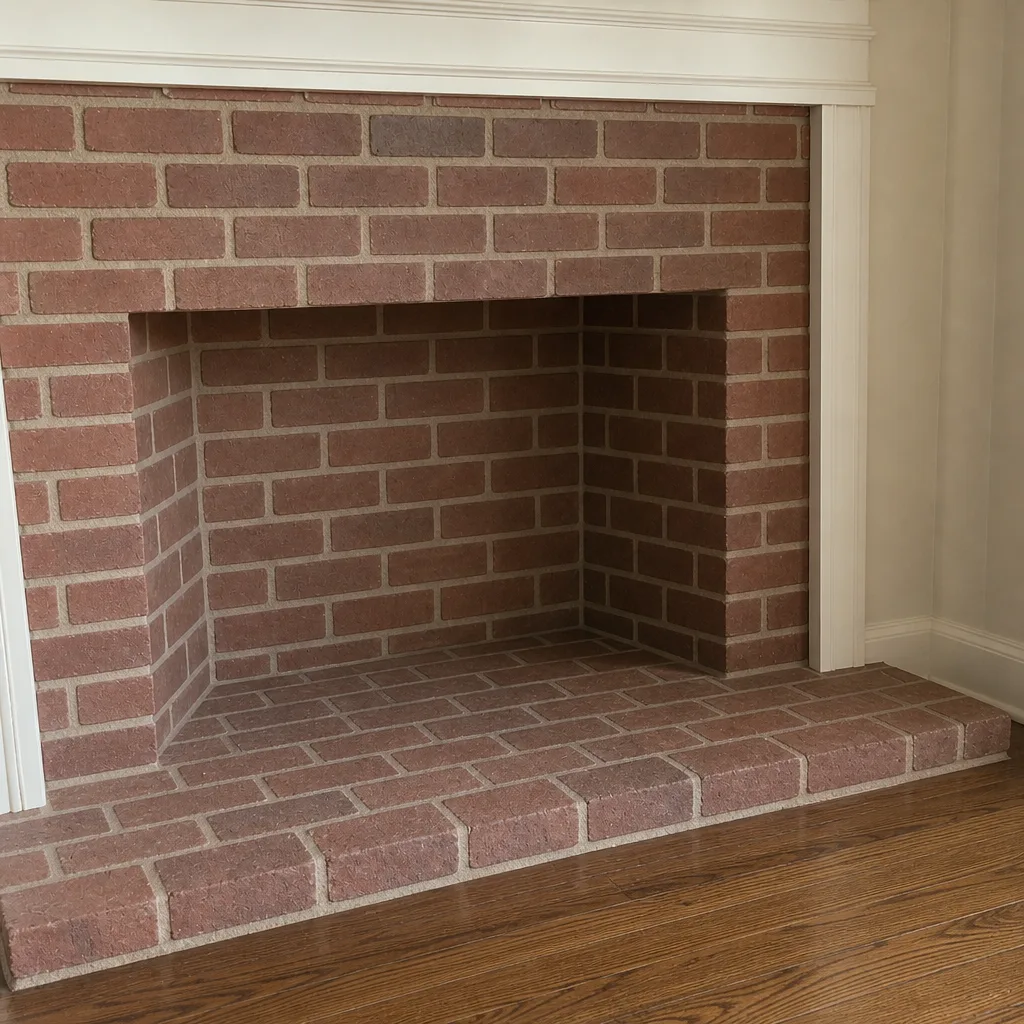
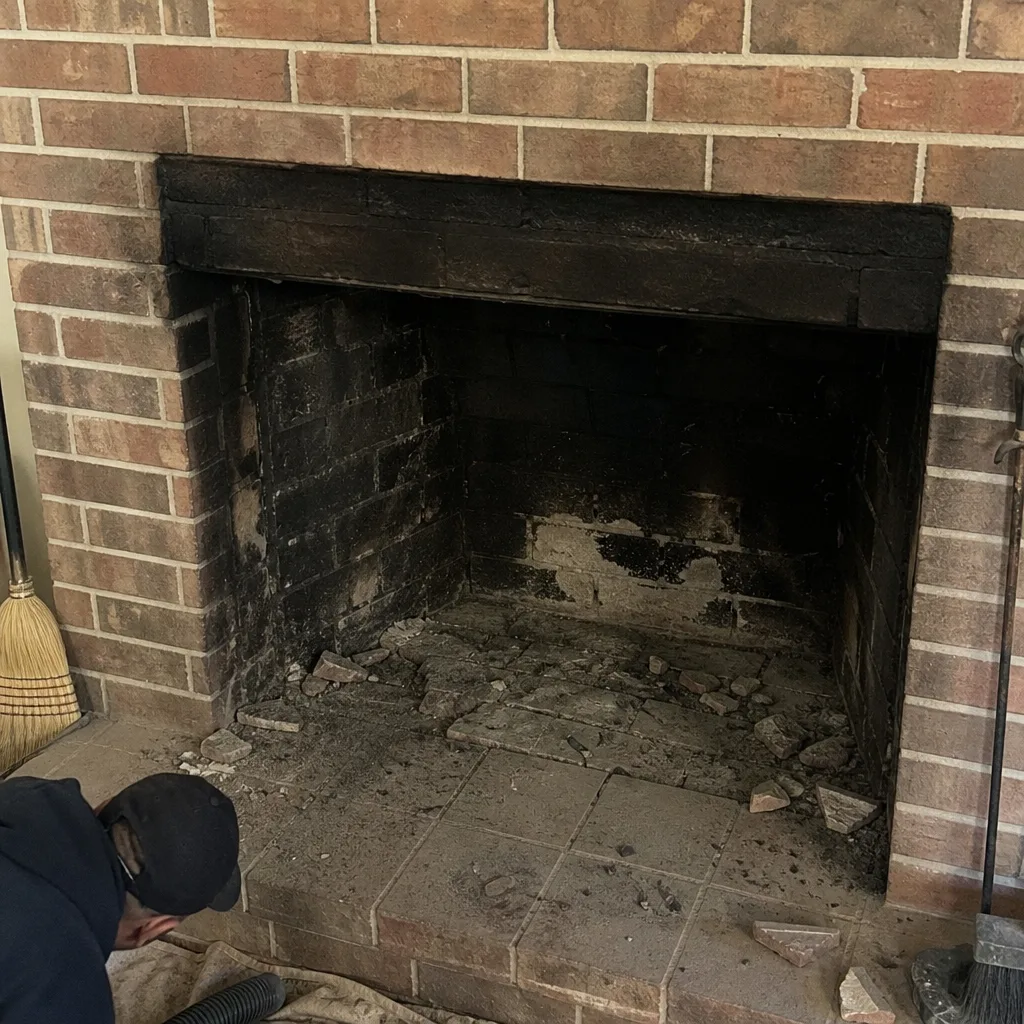
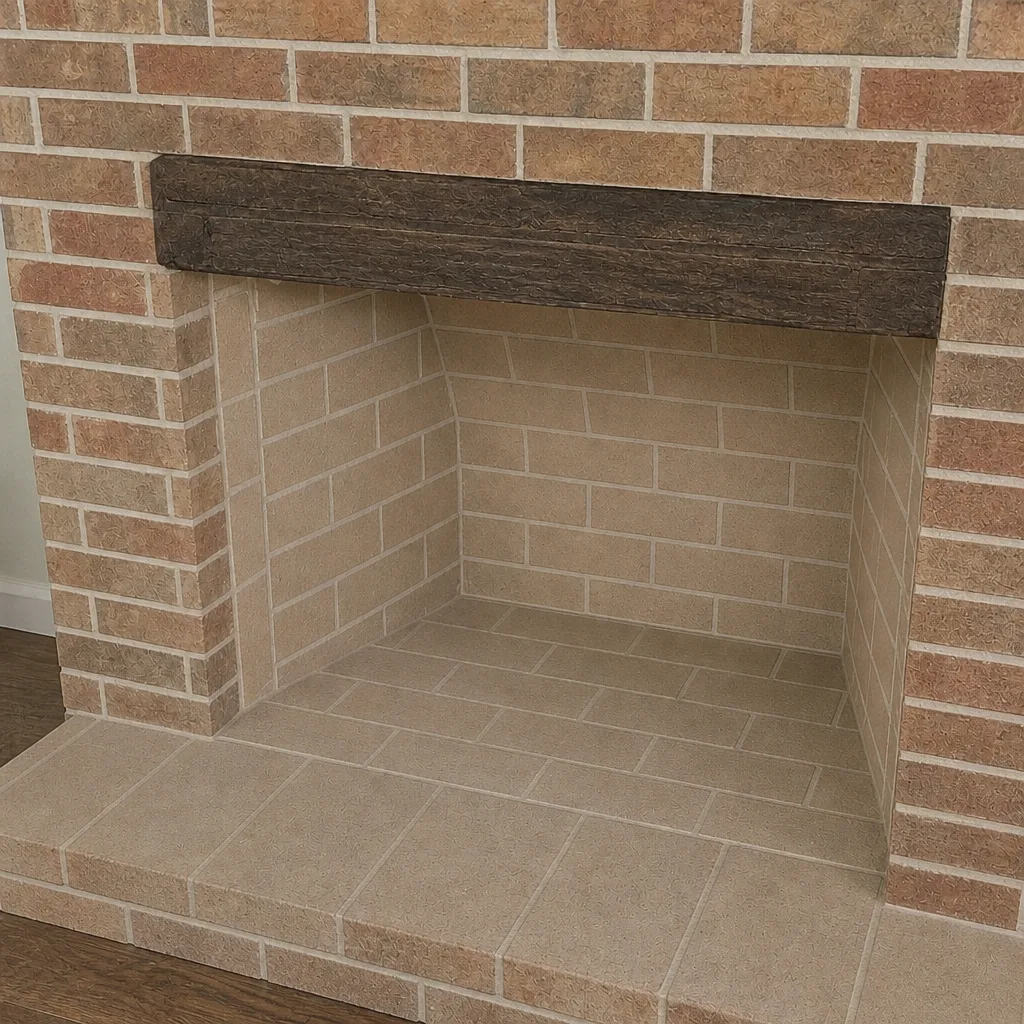
See the difference
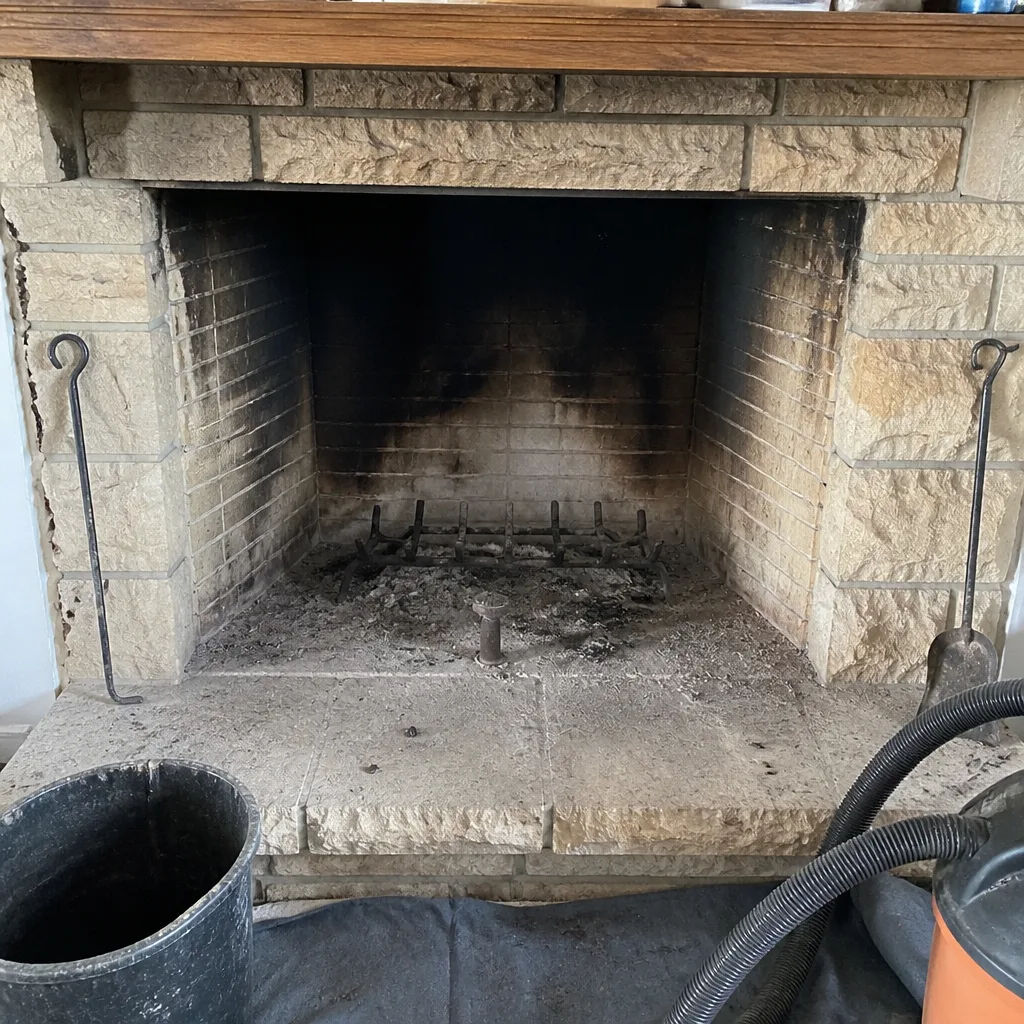 Before
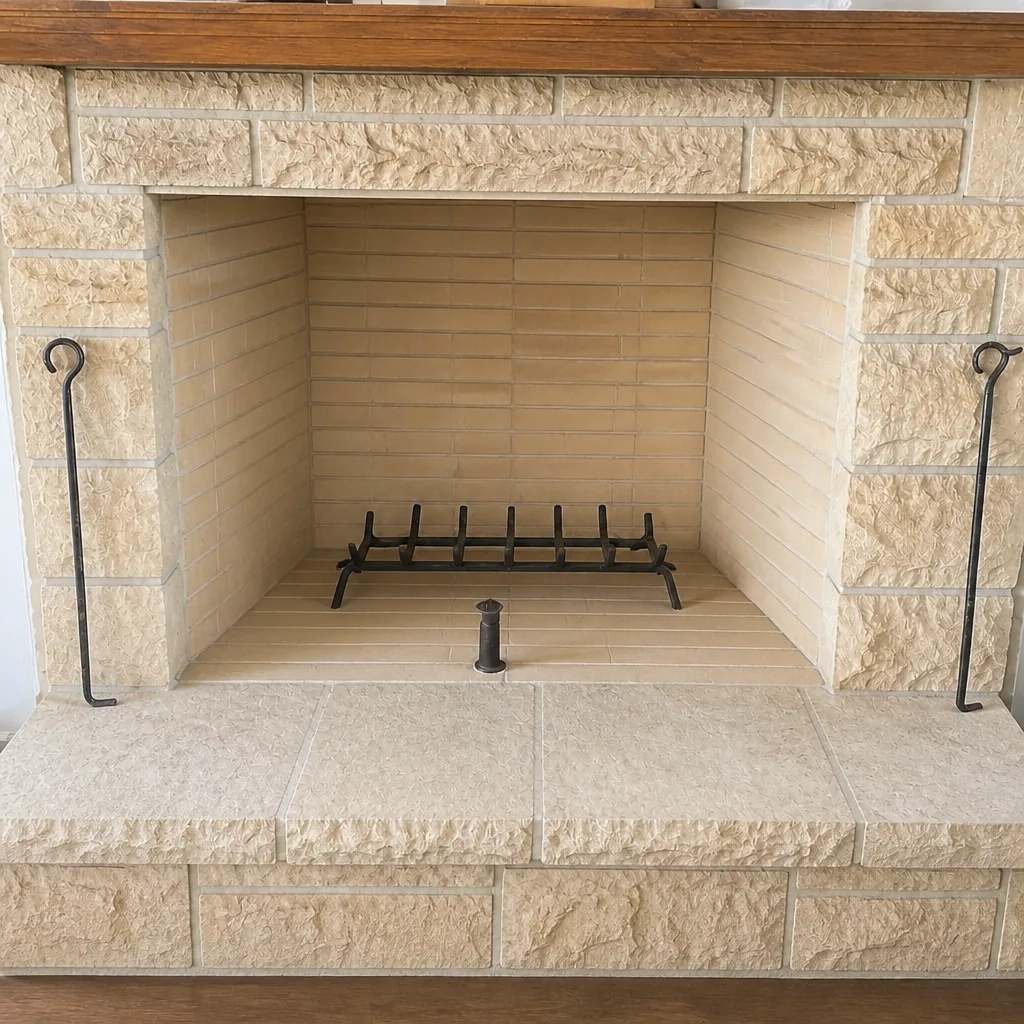 After
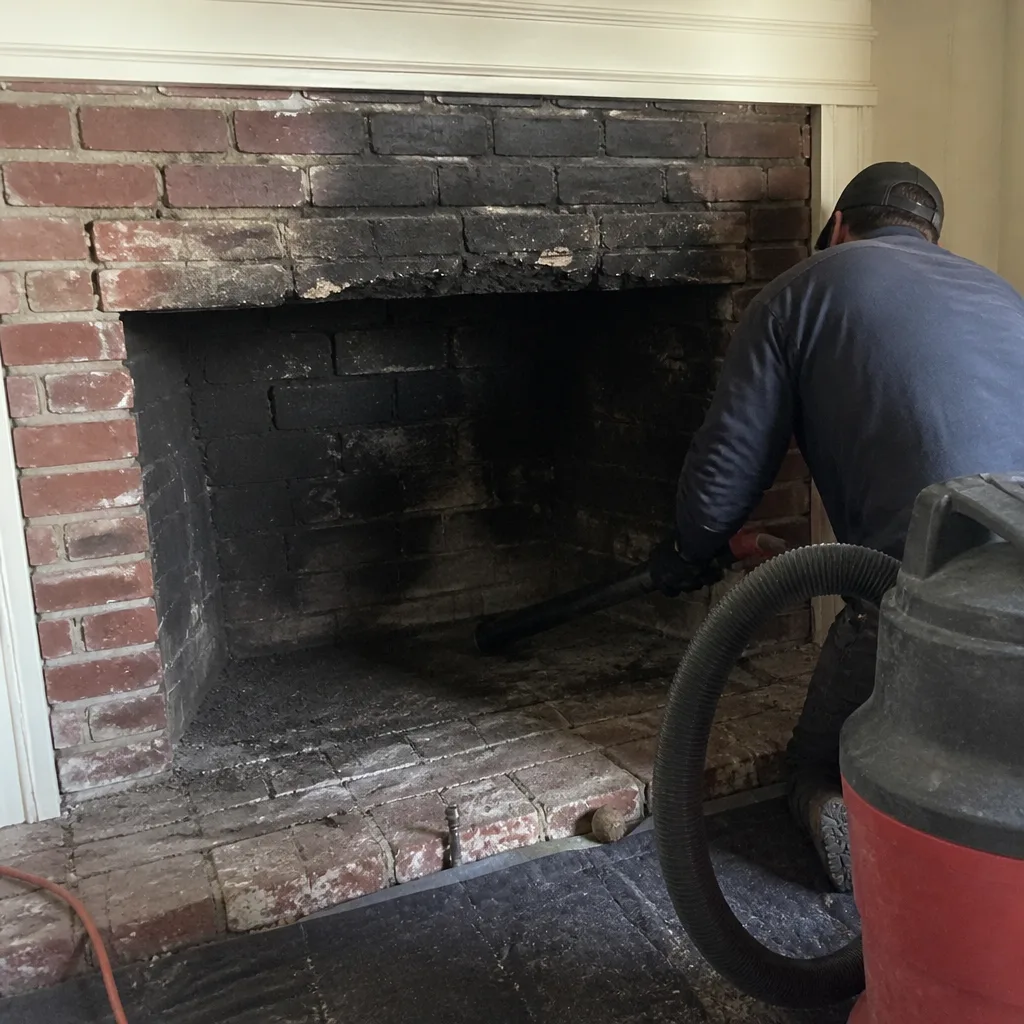 Before
 After
 Before
 After
When to Call a Professional
Call a professional sweep in Norman if any of the following applies: you’ve never had a camera inspection of your liner; you’re seeing glazed, tar-like creosote on the flue walls; your fireplace is a prefab or zero-clearance unit and you’re not sure what’s safe to brush; the flue has any offset or bend; you have a smoke problem when the fireplace is running; or you’re buying or selling a home and need a documented inspection. Any one of those is reason enough to book a professional sweep.
Chimney Sweep Norman offers free estimates in Norman. Call (888) 561-3468. We answer 24/7. Fast dispatch from 7am to 7pm, Sunday through Friday.
For the full scope of what we handle, see our Chimney Sweep Norman overview, and our chimney sweep and chimney repair pages for more detail on the specific services and materials we use.
Frequently Asked Questions
Yes, in specific situations. DIY brushing is appropriate when your chimney has a single straight flue, a prior professional assessment has confirmed stage-one flaky creosote, and you have an accessible cleanout at the base. If any of those three conditions is missing, a professional sweep is the safer call. In Norman, many older masonry homes meet all three; most prefab and zero-clearance units do not.
A brush cleaning knocks loose stage-one creosote off the flue walls in a straight run. A professional sweep includes a pre-scan camera inspection, the appropriate brush or rotary tool for the creosote stage, smoke chamber and damper cleaning, and a post-clean camera scan with a written report. The camera inspection is the part that matters most for safety, and it’s the part a brush kit can’t provide.
Most Norman chimneys should be professionally assessed once a year, before the burn season. If you burn heavily through the winter – daily fires from November through February – you might need a sweep more than once a season. The 1/8 inch creosote threshold is the common industry standard for when buildup warrants cleaning. A professional assessment catches the threshold; a visual check from the firebox does not.
A professional sweep includes setup with sealed drop cloths and HEPA vacuum, a pre-scan camera inspection of the flue and liner, brushing or rotary cleaning as appropriate for the creosote stage, smoke chamber and damper cleaning, cleanout and debris removal, a post-clean scan, and a written report. The report documents the chimney’s condition for insurance, real estate, or personal records. That’s the full process, not just a brush down the flue.
It can. Using masonry brushes on a prefab zero-clearance unit can damage the firebox liner panels, which affects the unit’s certified safety characteristics. Brushing over stage-two or glazed creosote can polish the surface without removing it, leaving the tar in place. And brushing without a prior professional assessment gives false confidence about a liner that was never actually evaluated.
Yes, and it’s more important in that case, not less. Homeowners who brush faithfully tend to skip professional inspections because they feel caught up on maintenance. The brush cleans what it reaches and can’t assess liner condition. A camera scan confirms whether the liner is intact and whether anything past the firebox needs attention. Once-a-year brushing plus a once-a-year professional scan is a sound combination; brushing alone is not.
The Bottom Line
DIY chimney brushing has a place in Norman. That place is narrow: a straight flue, confirmed stage-one creosote from a prior professional assessment, accessible cleanout, and the right safety setup – respirator, HEPA vacuum, sealed firebox. Under those conditions, brushing once a season is legitimate maintenance, not a shortcut. Outside those conditions, the brush gives you the feeling of maintenance without the substance. Glazed creosote, smoke chamber buildup, prefab fireboxes, and unevaluated liners all require a professional with a camera and the right tooling. The camera scan is the piece that separates a clean chimney from a safe one, and no brush kit can substitute for it.
If it’s been more than a year since your Norman chimney was professionally evaluated – or if you’ve been brushing DIY without a camera check – the right next step is an inspection. Call (888) 561-3468 for a free estimate. We answer 24/7. Fast dispatch from 7am to 7pm, Sunday through Friday.
Written by the team at Chimney Sweep Norman.