
Last updated November 15, 2026
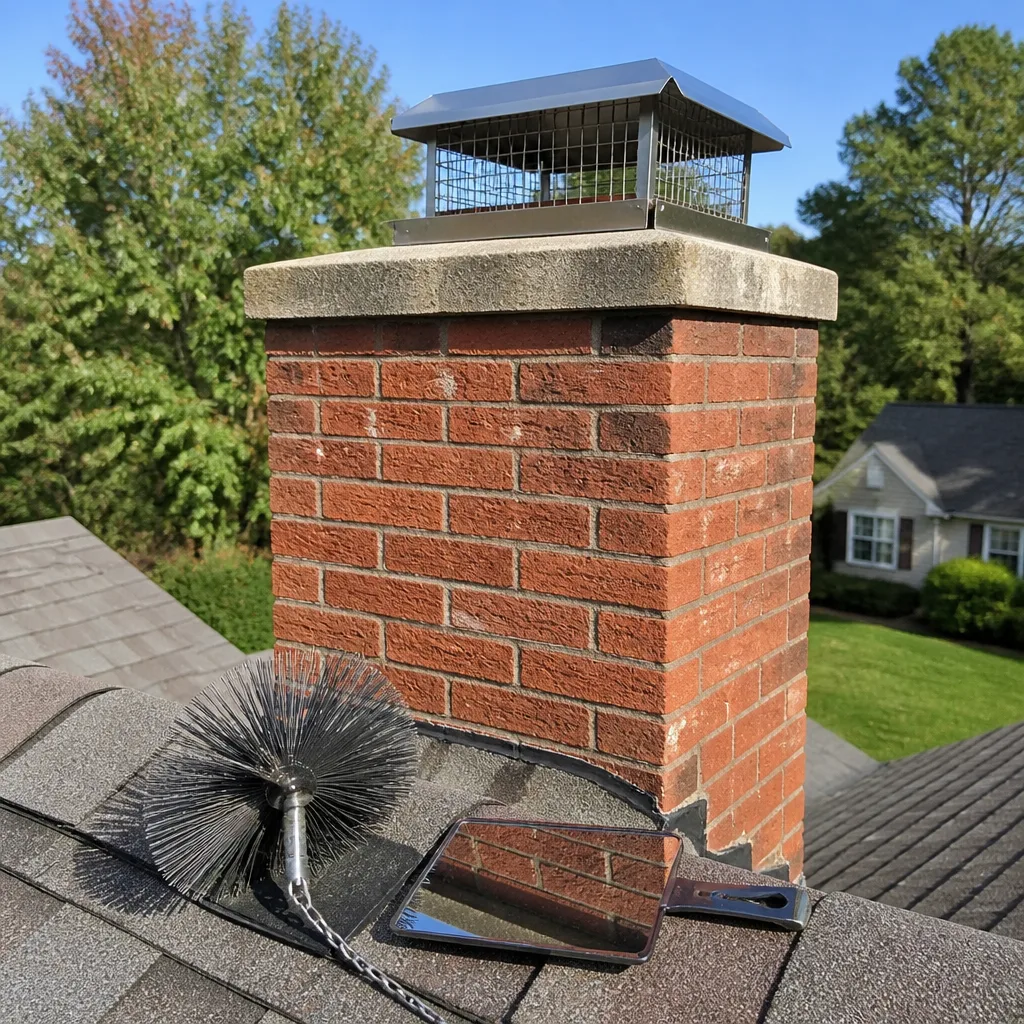 Sweep & inspection
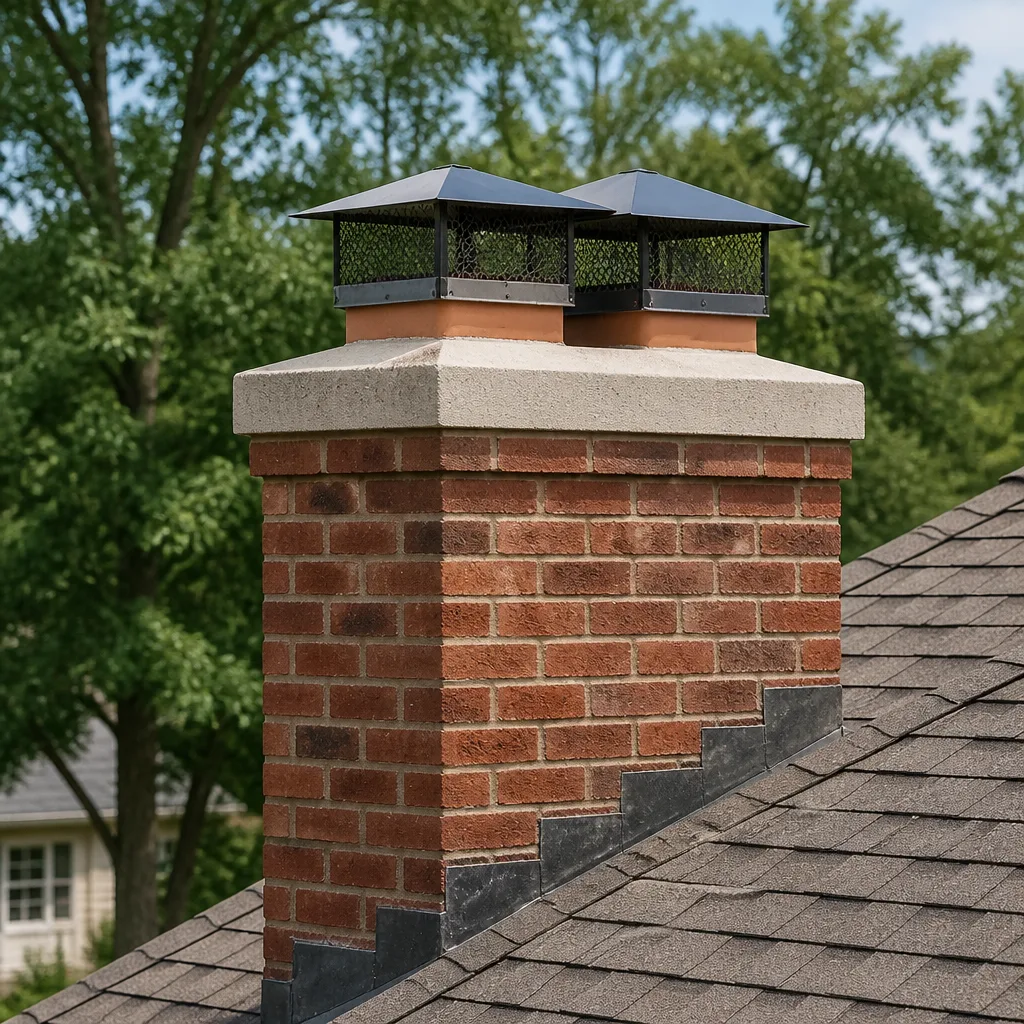 Caps & crowns
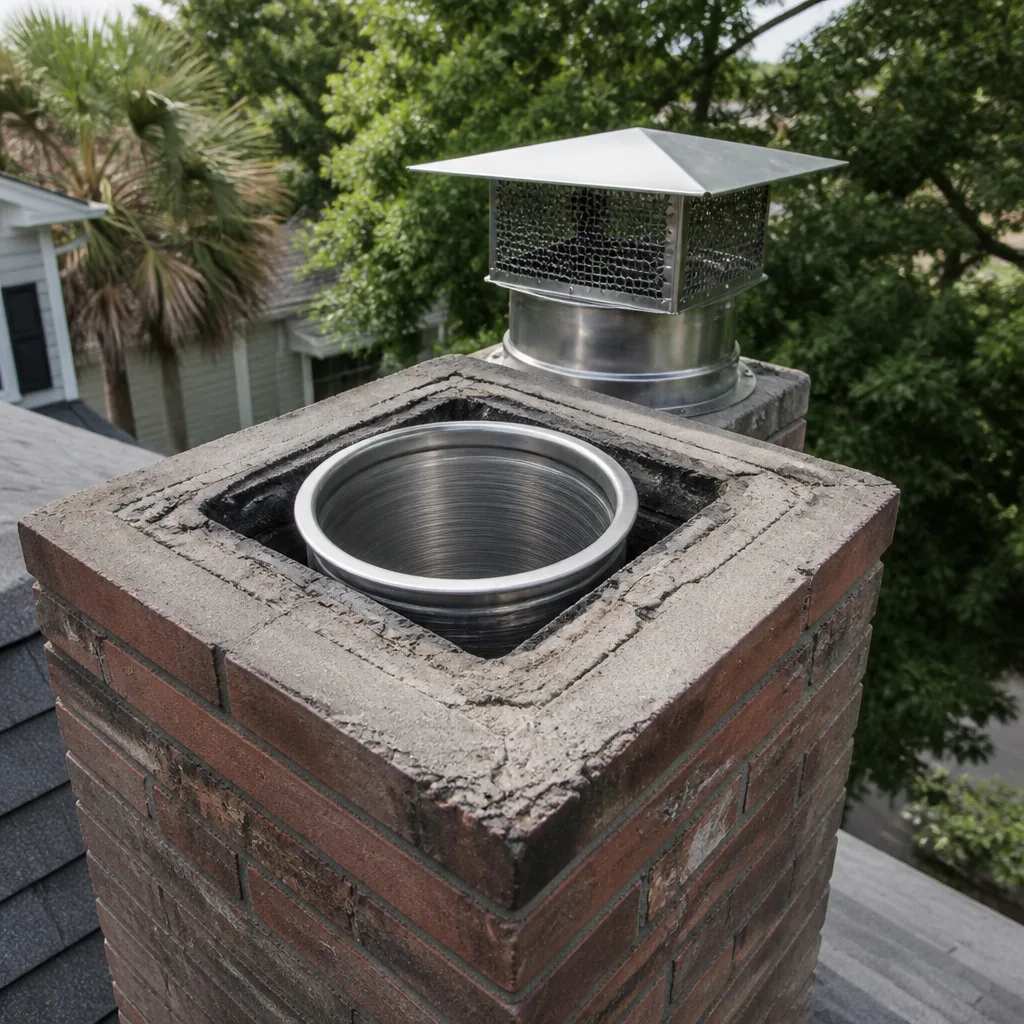 Flue relining
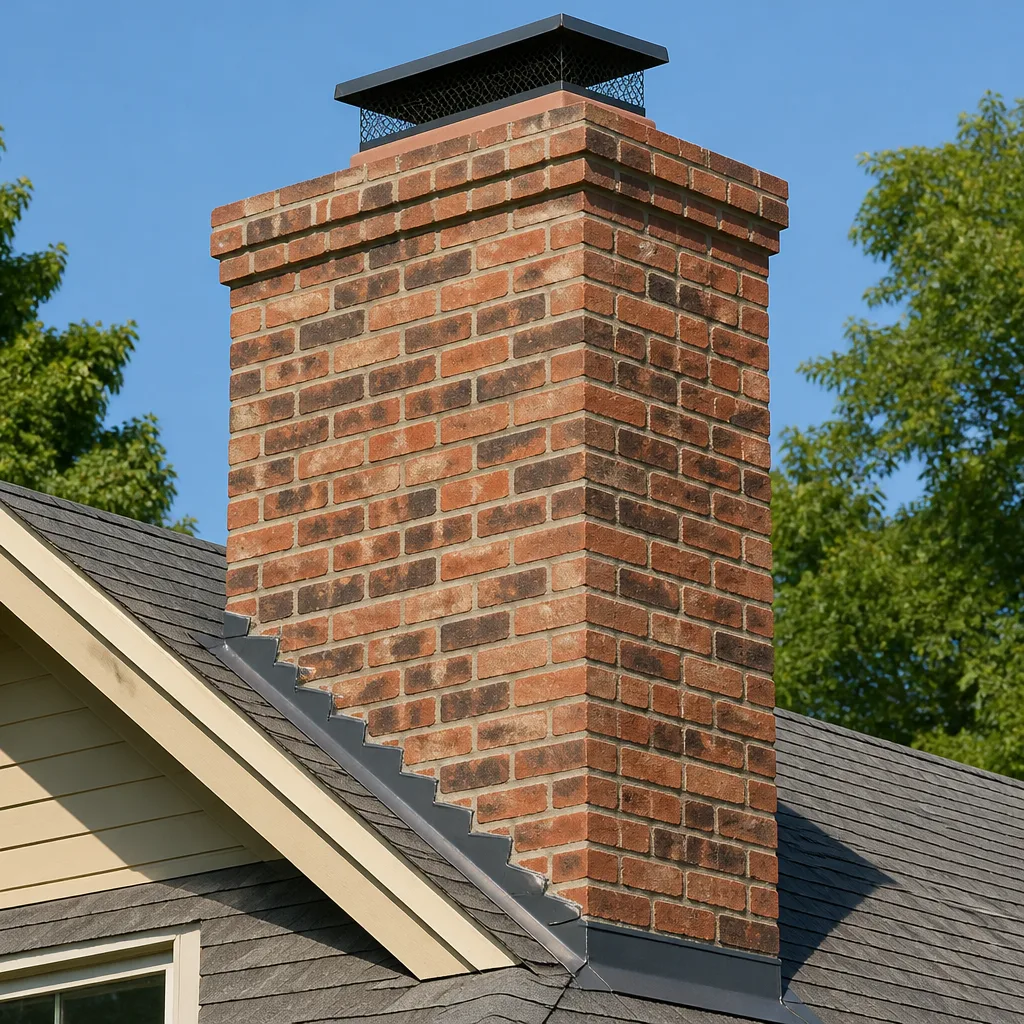 Masonry repair
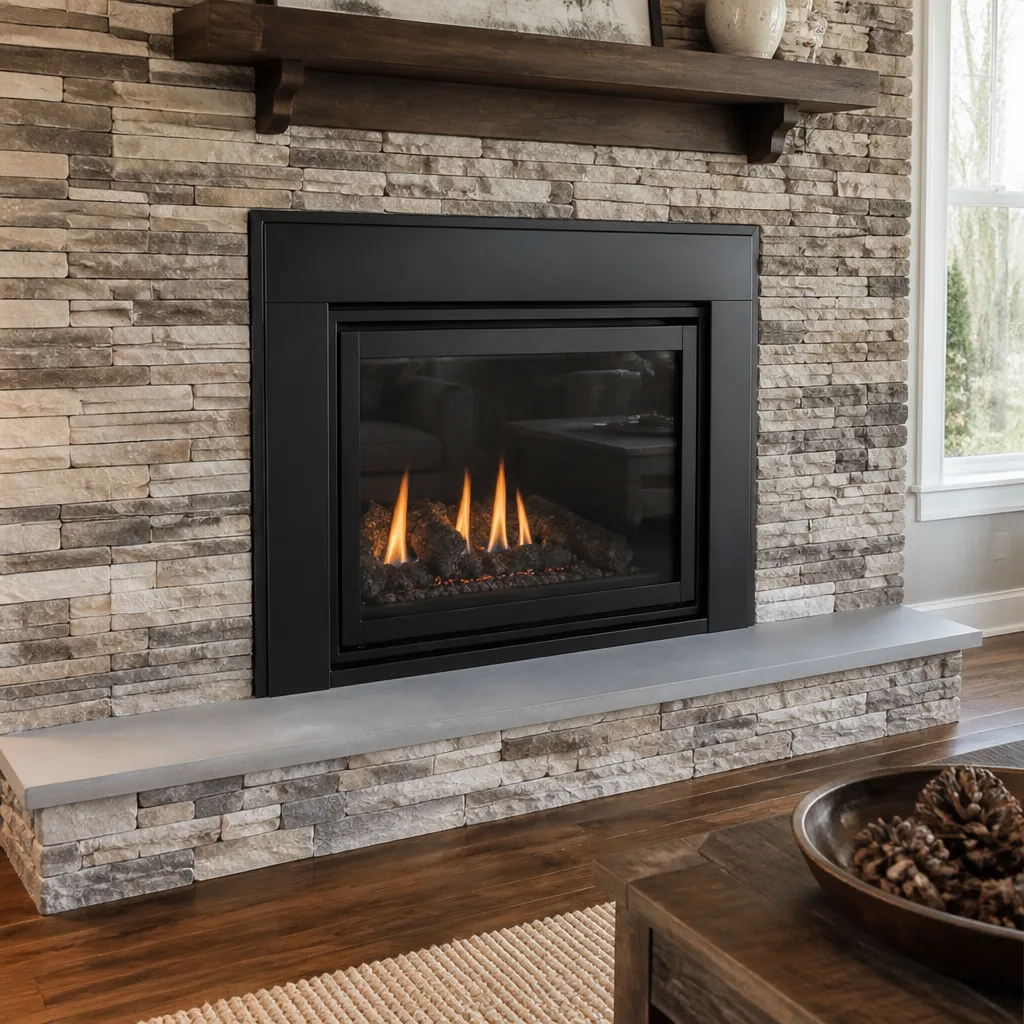 Gas fireplace service
Level 1 sweep and inspection to the NFPA 211 annual standard - flue, crown, cap, and flashing checked and photographed
Chimney sweep logs do not sweep chimneys. They loosen some creosote - which then falls where a brush and vacuum still have to collect it.
Chimney Cleaning Warning Signs: A Norman Homeowner’s Reference Guide
A smoky smell in the living room on a windy day isn’t always a draft problem. Sometimes it’s a smoke shelf packed with debris pushing back against pressure changes in the house, and that’s a cleaning issue, not a structural one. Knowing which is which saves you a service call and a lot of worry. The trouble is that most chimney warning signs get misread or explained away until they become expensive. This guide walks through each signal a Norman homeowner is likely to notice, explains the mechanism behind it, and tells you what response it actually calls for. By the end you’ll know what’s cosmetic, what’s urgent, and what can wait.
Quick Answer
Chimney cleaning warning signs in Norman include a strong smoky odor even when the fireplace is cold, black or glazed creosote visible on the flue walls, white staining on exterior brick, rumbling or ticking sounds in the flue, smoke rolling back into the room, and cracks in the firebox floor or damper assembly. Any one of these means the chimney needs a professional look before the next fire. Glazed creosote and smoke backdraft are the two signs that most often point to a cleaning problem rather than a repair.
Styles & brands we work with
- Sweep & inspection
- Caps & crowns
- Flue relining
- Masonry repair
- Gas fireplace service
Table of Contents
- Smoke Backdraft: Three Causes, Three Different Fixes
- What Creosote Buildup Actually Looks Like
- White Staining on Exterior Brick (Efflorescence)
- Sounds Inside the Flue: Telling Them Apart
- The “Just Burned” Smell Hours After the Fire Is Out
- Firebox Floor Cracks: Cosmetic vs. Structural
- Damper and Smoke Chamber Warning Signs
- How Often a Norman Chimney Needs Sweeping
Smoke Backdraft: Three Causes, Three Different Fixes
Smoke rolling into a living room is the single most common complaint we hear, and it almost never has one cause. The symptom looks identical – a puff of smoke escaping the firebox when you light a fire or when the wind shifts – but the mechanism behind it determines what kind of work will actually solve it. Treating the wrong cause wastes money and leaves the problem in place.
Cause one: a blocked or debris-filled smoke shelf. The smoke shelf sits just behind the damper and catches everything that falls down the flue. When soot, leaves, and animal nesting material pile up on it, the flue’s ability to pull air reverses under certain pressure conditions. This is a cleaning problem. A standard chimney sweep removes the debris and the backdraft stops.
Cause two: negative pressure in the house. Modern homes in Norman are built tight, and a tightly sealed house can starve a fireplace of combustion air. When the house pulls harder than the chimney does, smoke comes back inside. Cracking a nearby window before lighting a fire will tell you a lot – if the problem disappears, you’re looking at a pressure issue, not a chimney issue. No amount of sweeping fixes a pressure problem; it’s about air supply.
Cause three: a damaged or misaligned flue liner. A cracked, spalled, or separated liner disrupts the smooth column of rising hot gas. Smoke eddies and spills instead of going up. This is the one that needs the most careful diagnosis, because the fix ranges from a liner restoration to a full replacement. Our technicians have up to experience distinguishing among these three, and the difference matters: one is a cleaning job, one is a house-ventilation conversation, and one is a structural repair.
What Creosote Buildup Actually Looks Like
Most homeowners picture creosote as black soot. They’re not wrong, but the kind that matters doesn’t always look dramatic. Creosote forms in three recognizable stages, and each one behaves differently when a fire gets going.
- Stage one: light, flaky soot. Black or gray dust that brushes off easily. This is normal accumulation after a season of burning and comes off with a standard sweep.
- Stage two: crusty, brittle deposits. Dark, hardened flakes and chips clinging to the flue walls. A stiff brush removes most of it, but it signals that your burning habits or wood moisture are feeding accumulation faster than usual.
- Stage three: glazed creosote. Hard, shiny, tar-like. This is the dangerous one. It’s the fuel source in a chimney fire, and a normal brush will not take it off. Glazed creosote usually requires a chemical sweeping method or, in advanced cases, liner work. If your flue walls look wet and shiny like they’ve been varnished, that’s glazed creosote.
The reason this matters in Norman specifically is our burn season. We get long stretches of cool, damp weather from late fall into early spring, and a lot of homeowners burn wood that hasn’t fully seasoned because the fire feels good and the wood was there. Unseasoned wood burns cooler and produces more creosote per hour of use. Combine that with a cold flue that doesn’t draft well at startup and you get glazed buildup faster than someone burning hot, dry, seasoned wood. Inspecting the flue once a year and adjusting your wood supply is the most effective thing you can do to stay out of stage three.
White Staining on Exterior Brick (Efflorescence)
White, powdery staining on the outside of a chimney is called efflorescence, and it’s not the same problem as rust or soot. Efflorescence is mineral salt pushed to the surface of the brick by moisture moving through it from the inside out. The stain itself is harmless. What it tells you is that water is inside the masonry and finding an exit through the brick face, and that’s the part worth understanding.
The direction of moisture travel matters. If the stain appears on the lower third of the chimney or is concentrated around the flashing and the roofline joint, the water is usually coming from outside – a failed flashing detail, cracked crown, or roof leak. That’s a water-entry problem and it’s urgent, because freeze-thaw cycles will start opening the masonry up.
If the staining appears in the middle or upper portion of the chimney, or wraps around it, the moisture may be coming from inside the flue – combustion gases condensing on the inner surface as they cool and pulling salts out through the masonry. That points toward a liner problem, an oversized flue, or a flue that’s not insulating well, and it’s worth a close look before you write it off as cosmetic. In our experience, homeowners tend to under-react to interior-sourced efflorescence and over-react to exterior-sourced staining. A documented inspection tells you which one you have.
Sounds Inside the Flue: Telling Them Apart
Chimneys make noise. Most of it is ordinary. Some of it isn’t, and learning to tell the sounds apart is one of the more useful skills a homeowner can develop. Three sounds come up again and again in Norman homes, and each points somewhere different.
Scratching, scurrying, or a light fluttering rasp: animal intrusion. Birds, squirrels, and raccoons get into flues through uncapped or damaged tops. The sound is irregular, present even on a cold, still flue, and often accompanied by nesting debris falling onto the damper. A proper cap – we work with Gelco and Olympia Chimney caps – closes the door on this, and the debris has to come out before you light a fire.
Ticking, tapping, or a metallic ping that appears only when a fire is burning and quiets when it goes out: thermal expansion. The metal liner or the flue components expand and contract as they heat and cool. It’s usually harmless, but if it’s new – as in, you never heard it before this season – have someone look. A change in sound can mean a liner section has lost clearance or is shifting.
A distinct clunk or a sudden rush of material followed by a plume of dust at the damper: debris fall. Masonry spalling, a dislodged piece of liner, or a collapsed crown fragment dropping down the flue. This one deserves attention quickly, because a fallen liner chunk is a fire and carbon monoxide risk and a clear sign that the liner itself needs repair.
If you’re not sure which category a noise falls into, describe it on the phone. That short conversation is often enough to tell us whether it’s a sweep, a cap, or a liner inspection.
The “Just Burned” Smell Hours After the Fire Is Out
You put out the fire hours ago, the room has cooled down, and the house still smells like a campfire. That’s not normal creosote odor. Creosote smells like an old ashtray – dry, stale, and strongest on warm, humid days. The freshly-burned, smoky, sharp smell that hangs on long after the fire is out usually points to a specific spot in the smoke chamber rather than to the flue as a whole.
The smoke chamber is the wide, sloped area directly above the damper and below the flue. Its job is to funnel smoke going up. Because it’s angled and often rough-surfaced inside, creosote and soot collect on its walls and in the corners where the slope meets the damper frame. When the masonry at those corners starts to fail – a crack, a spalled mortar joint, or a pulled-back layer – some chimney gases can seep into that joint and continue to give off a smoky smell even after the fire has gone cold.
A standard sweep doesn’t reach into those failed joints. That’s where a repair step matters, and this is exactly the situation where restoring the interior surfaces with a proven resurfacing material makes sense. HeatShield is a ceramic resurfacing product we use to rebuild deteriorated mortar joints and smooth out damaged flue and smoke-chamber surfaces without tearing out the whole liner. In our experience, a fresh-burned smell that comes back season after season usually lives in a smoke chamber corner, not in the flue itself, and it’s one of the easiest things to misdiagnose. If your chimney smells “hot” long after the fire is out, ask about the smoke chamber specifically.
Firebox Floor Cracks: Cosmetic vs. Structural
Every firebox floor develops some character over time. Some cracks are surface-level and harmless. Others are the reason a firebox has to come out of service until it’s repaired. The distinction is the direction of the crack, its depth, and where it’s located.
- Hairline cracks in the firebrick faces: common with age and heat cycling, usually cosmetic as long as they’re shallow and stable.
- A crack that extends from the firebox into the surrounding mortar joint: worth a close inspection, because heat gases can work their way behind the brick.
- Diagonal cracks radiating from a corner of the firebox floor: a sign the floor is moving and the underlying support may be compromised. Not cosmetic.
- A crack that runs across the full width of the floor or shows a gap you can see through: the floor has failed. Do not burn in the firebox until it’s evaluated and repaired.
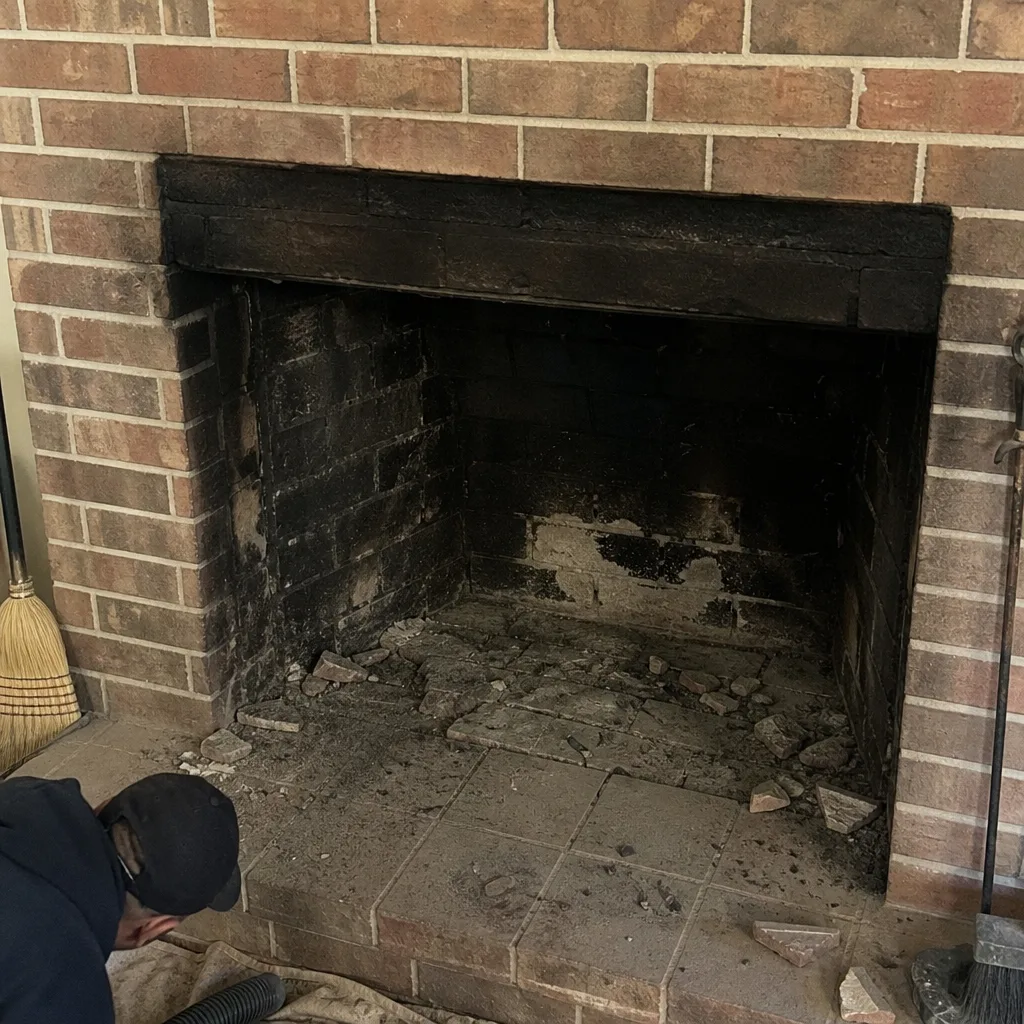
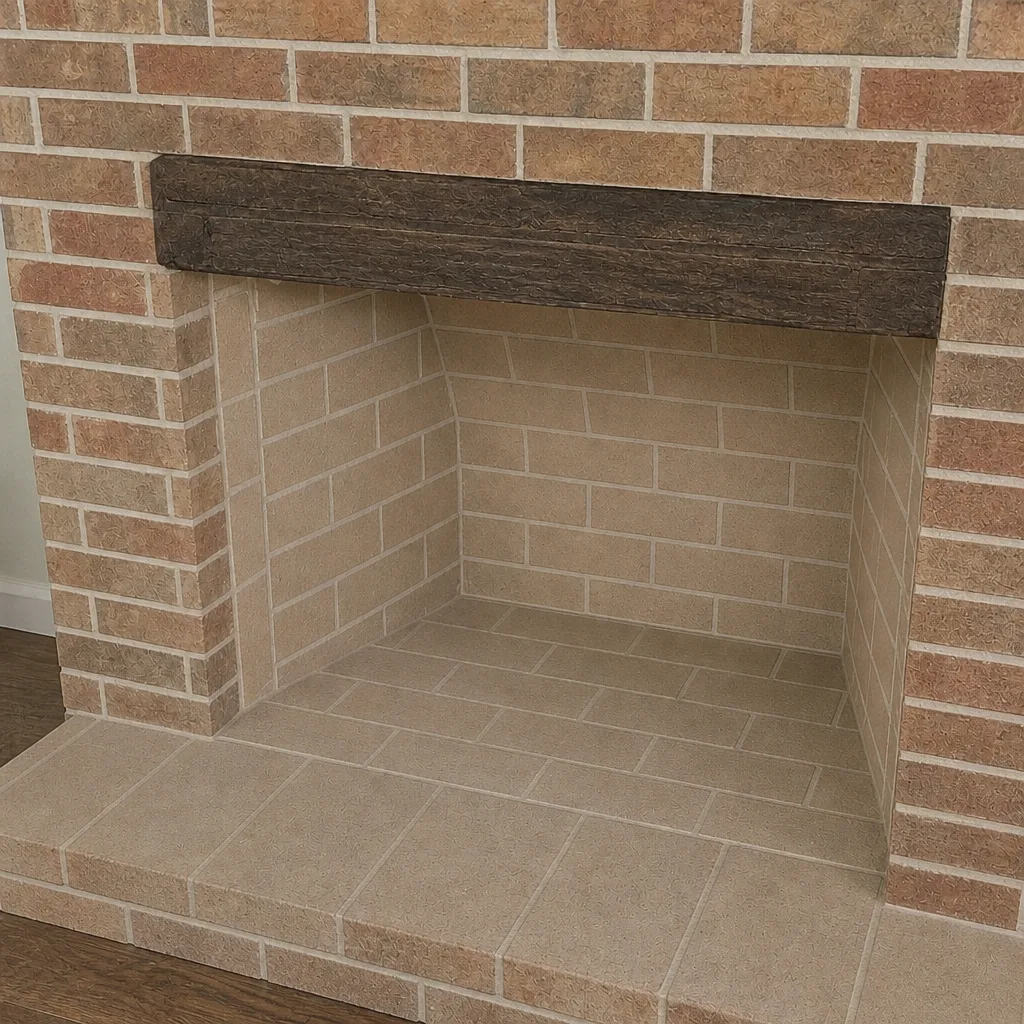
Firebox floor failure is a fire-safety issue, not a cosmetic one. Heat and embers can get behind the floor, and the structure beneath can be exposed. The fix isn’t necessarily a whole new firebox – sometimes the floor and the walls can be rebuilt with a proven refractory material like HeatShield’s ceramic system, and sometimes the firebox floor needs replacing. Either way, a professional needs to see it before you light another fire.
Damper and Smoke Chamber Warning Signs
A damper that’s hard to move, doesn’t sit flush, or won’t stay open is telling you something. The damper plate and its frame take a lot of heat over the years, and warping, corrosion, and soot buildup all affect how well they seal. A damper that’s stuck open lets heated air straight up the flue all winter and pulls warmed air out of the house; a damper that won’t open fully chokes the fire and pushes more smoke or carbon monoxide into the room.
Look for these specific signs when you check your damper:
- The damper handle turns freely but the plate doesn’t move with it.
- The damper plate sits at an angle that doesn’t match the frame when closed.
- Soot crust is visible along the damper edges or the frame.
- The damper won’t stay in the fully open position.
- A visible gap remains when the damper is “closed.”
The smoke chamber above the damper is easy to overlook because you can’t see it from the living room. A smooth, well-sloped smoke chamber guides smoke up and out. A rough or cracked one – especially one with failed mortar joints – creates turbulence and gives smoke a path back into the room. When we perform a chimney repair, part of our job is making sure the smoke chamber is as sound as the flue above it. This is one of those details that separates a sweep-and-go job from work that actually holds up.
How Often a Norman Chimney Needs Sweeping
The standard recommendation is to have a chimney swept and inspected at least once a year, and that’s the right baseline for a Norman home. But the number that matters more is the one you can observe: if the creosote layer on the flue walls has reached 1/8 inch or thicker, the chimney needs a sweep regardless of the calendar. If you burn regularly through the winter, a yearly sweep is the practical minimum. If you burn occasionally – a handful of fires a season – you can usually go longer, as long as you inspect.
Some conditions push you to a faster schedule:
- You burn wood that isn’t fully seasoned. Run a moisture meter on a fresh split before you rely on it.
- You burn a lot of manufactured logs or paper alongside your wood.
- You’ve noticed any of the warning signs in this guide during the season.
- Your firebox or flue is older and you haven’t had a documented inspection in more than a year.
- You’ve moved into a home where you don’t know the chimney’s service history. This is the common situation in Norman’s older established neighborhoods where a chimney may have had several owners.
A proper inspection produces a written assessment you can keep for insurance or use in a real estate transaction, and it catches developing problems early. Both of those are worth more than a cleaning alone. If you’re not sure how long it’s been since your last sweep, schedule an inspection first and let that tell you what’s due.
Common Mistakes to Avoid
- Treating a smoky smell as a draft problem without checking the smoke shelf. A debris-packed smoke shelf mimics a draft issue exactly, and a standard sweep fixes it. Ask specifically whether the smoke shelf was cleaned.
- Assuming white brick staining is weather damage. Efflorescence means moisture is moving through the masonry, and the direction of travel tells you whether the source is outside or inside. Don’t seal the brick and call it done – find the water path.
- Skipping the annual inspection because the fire drew well all season. Good draft doesn’t rule out a cracked liner or failing smoke chamber. Inspecting catches what you can’t see from the living room.
- Burning unseasoned wood because it was on hand. In Norman’s long burn season, wet wood produces creosote faster and coats the flue more thickly than dry wood. A little work with a moisture meter pays back in fewer sweeps and less glazed buildup.
- Ignoring a noise in the flue until fire season starts. Animal intrusion and debris fall are easiest to fix before the first cold snap, when the flue is cool and dry and the work doesn’t wait on the weather.
- Letting a handyman or discount sweep “clean” a glazed flue with a brush alone. A brush doesn’t remove glazed creosote. If the flue is glazed, the job requires a different method or the fire hazard stays right where it was.
- Lighting a fire over a failed firebox floor. If the crack runs across the floor or shows a gap you can see through, the firebox is out of service until it’s repaired. Heat behind the floor is a fire risk.
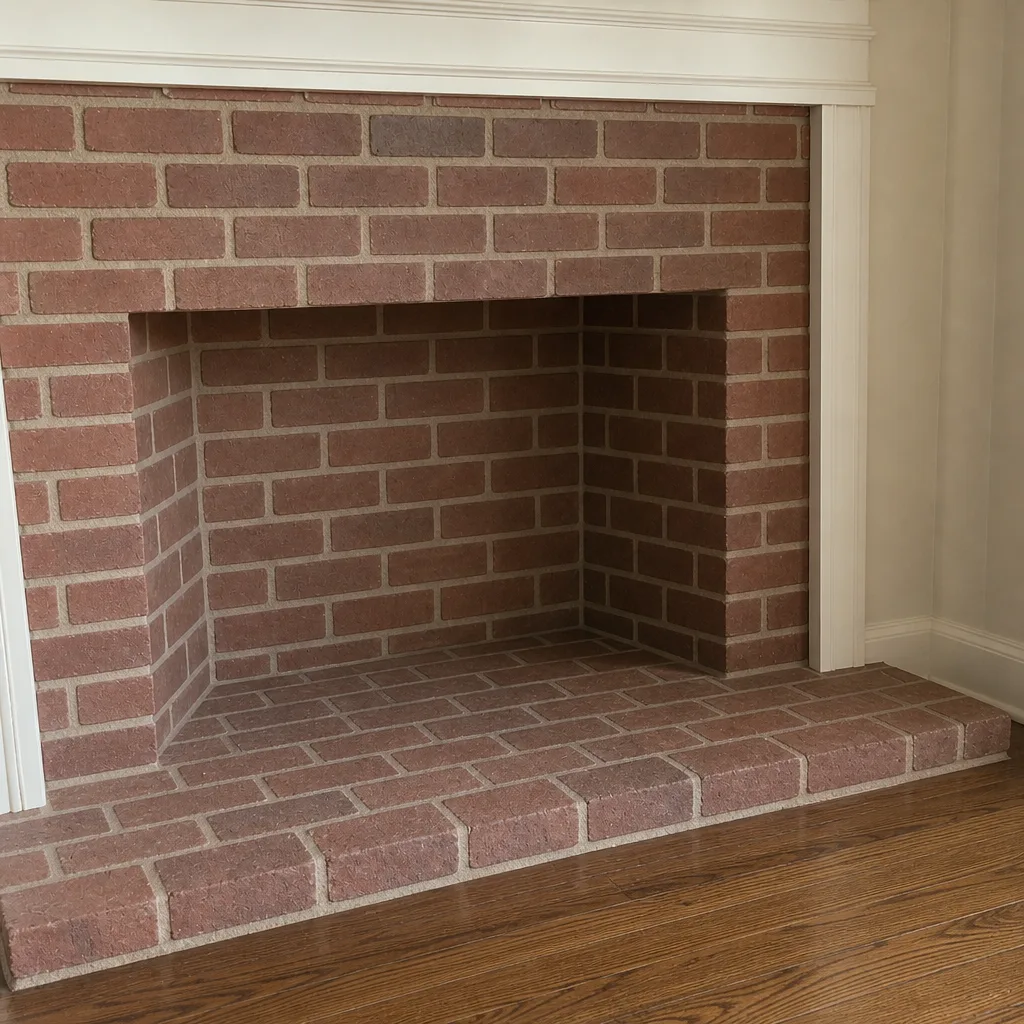
See the difference
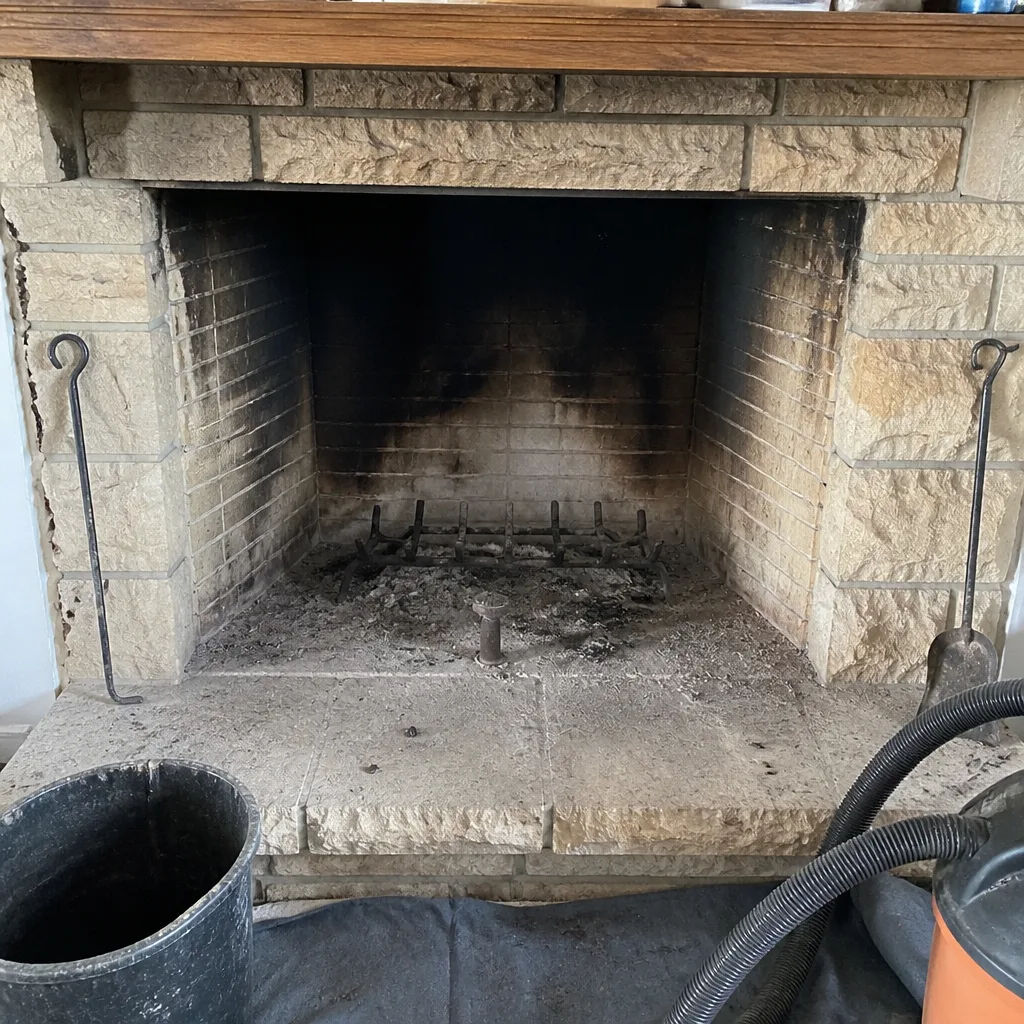 Before
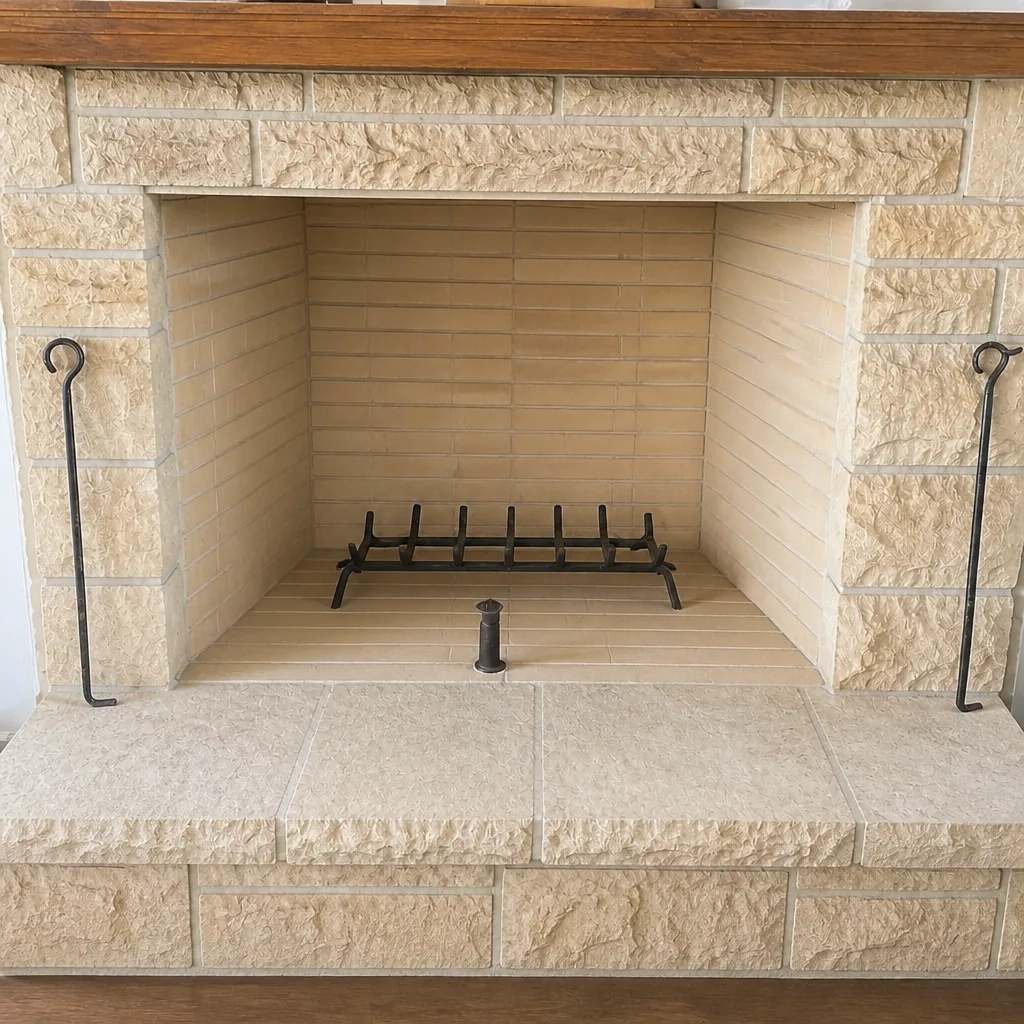 After
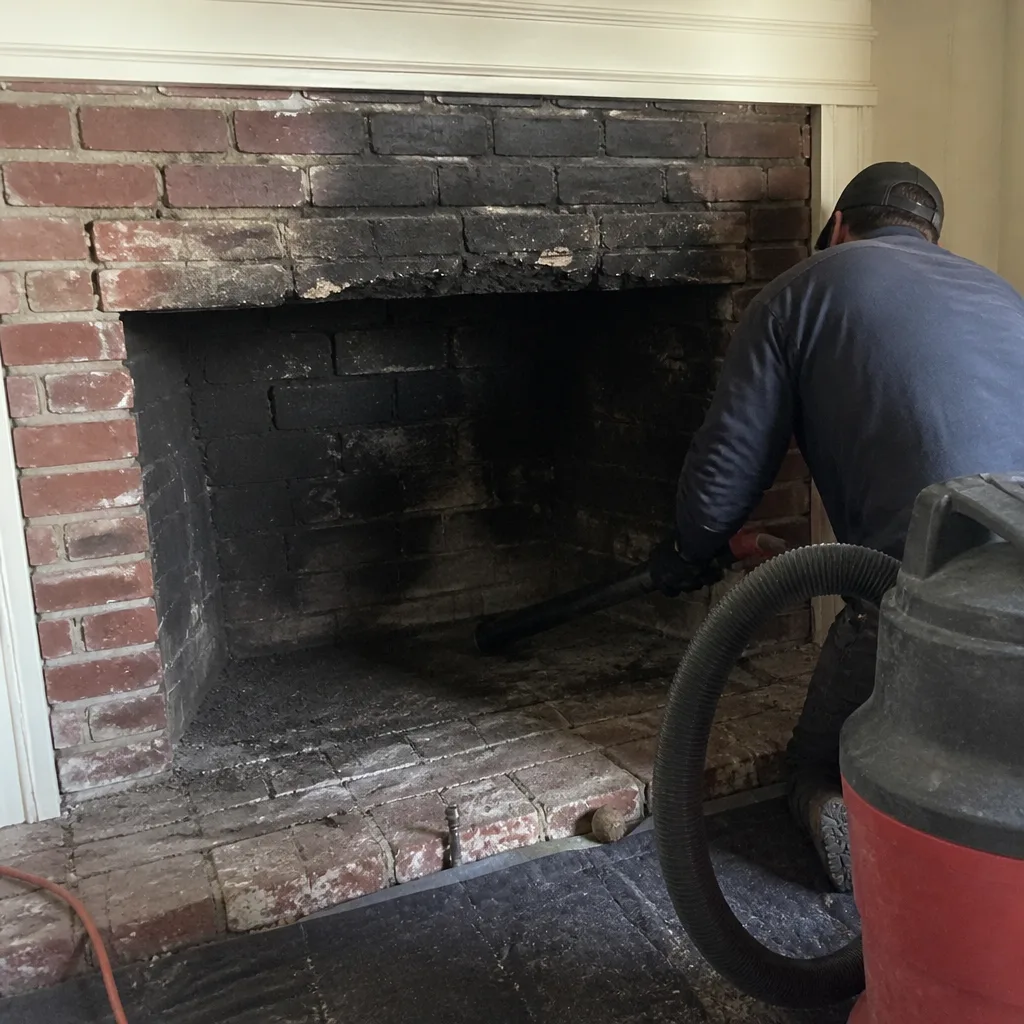 Before
 After
 Before
 After
When to Call a Professional
Call a professional if you see glazed creosote on the flue walls, smoke rolling into the room, a crack in the firebox floor that runs across its width, a damper that won’t seat, a fresh smoke smell that persists hours after a fire, or debris falling onto the damper. Call before you light the next fire if you heard a clunk in the flue or if the flue face has new white staining. And call for an inspection if you’ve moved into a home and don’t know the chimney’s service history. Some of these are quick cleanings; some need repair. Our technicians have up to experience telling them apart, and we don’t schedule repair work until we’ve actually seen the flue. Chimney Sweep Norman offers free estimates in Norman – call (888) 561-3468 and we’ll get the right next step on the calendar.
Frequently Asked Questions
The most common are smoky odor even when the fireplace is cold, black or glazed creosote on the flue walls, white staining on exterior brick, smoke rolling into the room, ticking or clunking sounds in the flue, and cracks in the firebox floor. Any one of these means the chimney needs a professional look before you light the next fire. Glazed creosote and smoke backdraft are the two that most often point to cleaning rather than repair.
A standard chimney sweep typically runs $150 to $300, and an inspection with a written report is usually bundled with the sweep or quoted separately. Pricing depends on the flue configuration, the creosote stage, and whether the smoke shelf needs clearing. The written estimate sets the final price, so call (888) 561-3468 for an exact quote – estimates are free.
Many deteriorating flues can be restored rather than replaced, which is less invasive and usually means the original masonry stays in place. HeatShield resurfacing is designed exactly for that – rebuilding damaged mortar joints and smoothing out failed flue and smoke-chamber surfaces when the structure is sound enough to keep. A liner replacement with a DuraFlex system or another flexible liner comes into play when the flue is too damaged, or when a tighter, more efficient liner makes the most sense. We’ll tell you which applies after we’ve seen the flue.
At least once a year, and more often if the creosote layer reaches 1/8 inch or you burn regularly through the season. If you burn wet wood or notice any of the warning signs in this guide, don’t wait for the annual calendar. Call (888) 561-3468 and we’ll book an inspection to check the actual condition.
Creosote keeps accumulating, and glazed creosote is the fuel that makes a chimney fire possible. A cracked or spalled liner can let combustion gases into the house, which is a carbon monoxide concern. Skipping the sweep doesn’t always lead to a disaster, but it does mean any developing issue is left to grow until the symptoms are more expensive – and sometimes structural – to fix.
That lingering “just burned” smell usually points to failed masonry at a smoke chamber joint, not to creosote alone. The smoke chamber collects soot in its corners, and when that masonry begins to crack or spall, the smell seeps out long after the fire has gone out. A sweep alone won’t reach those joints; ask specifically about the smoke chamber, and call (888) 561-3468 for an inspection to confirm.
The Bottom Line
Most chimney warning signs are meant to be read, not ignored. A smoky smell, white brick staining, a ticking flue, a fresh-burned smell after the fire is cold, and a crack across the firebox floor all carry a specific meaning – and they’re not all the same kind of problem. Some point to a sweep, some to a repair, and some to a liner restoration. What matters is distinguishing among them before the symptoms compound. If a flue can be restored with HeatShield instead of replaced, we’ll tell you that. Trade-grade materials – DuraFlex liners, Gelco caps, Olympia Chimney components, Famco, Copperfield – aren’t just a purchase; they’re what lets us know a repair will last. Sweep. Repair. Inspect. One company, one standard of work.
If you’re not sure what your chimney is telling you, the fastest way to know is to have someone look. Call (888) 561-3468 for a free estimate in Norman. We answer 24/7. Fast dispatch from 7am to 7pm, Sunday through Friday. A call outside those hours is booked into the next opening.
Written by the team at Chimney Sweep Norman.